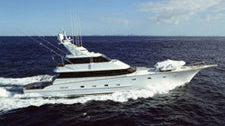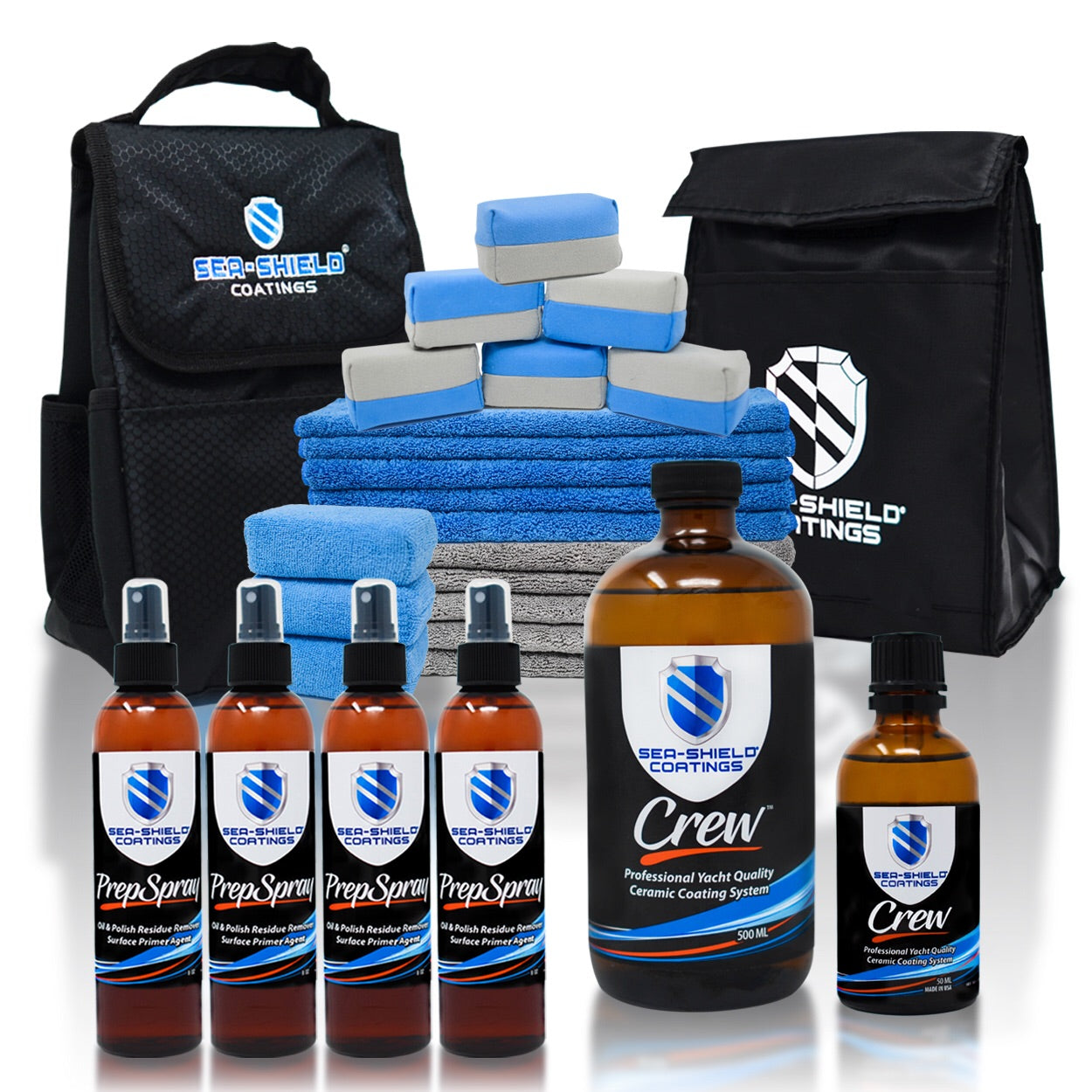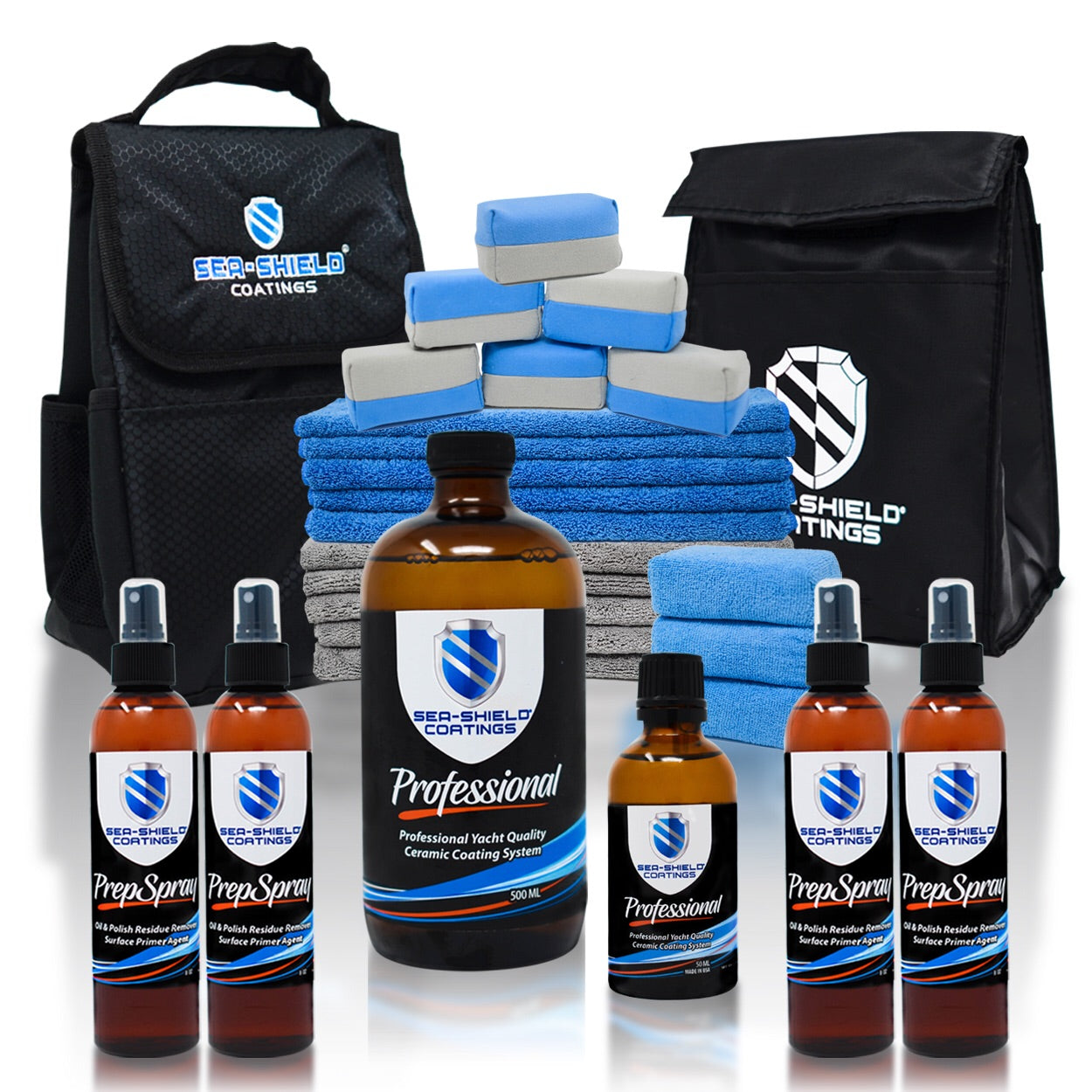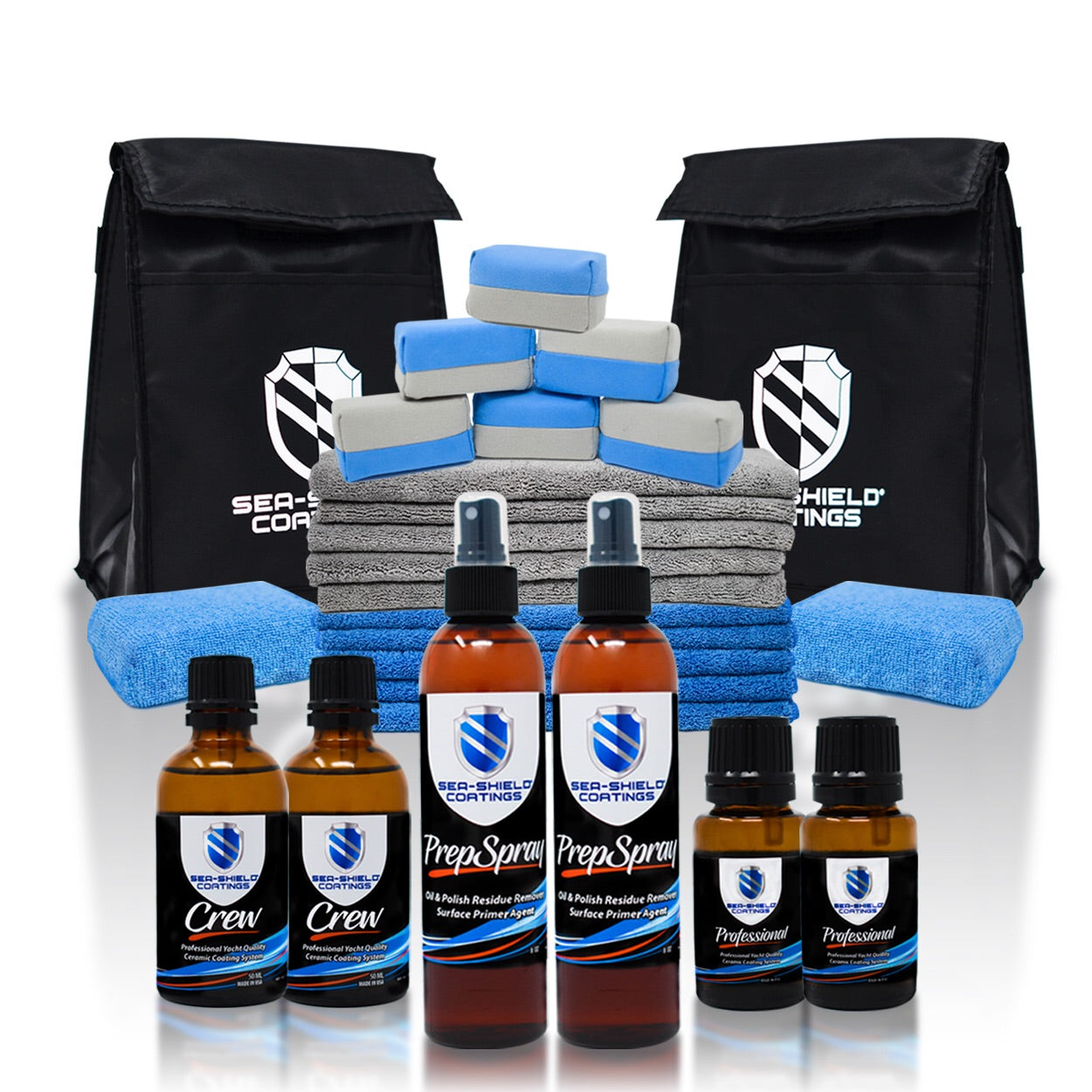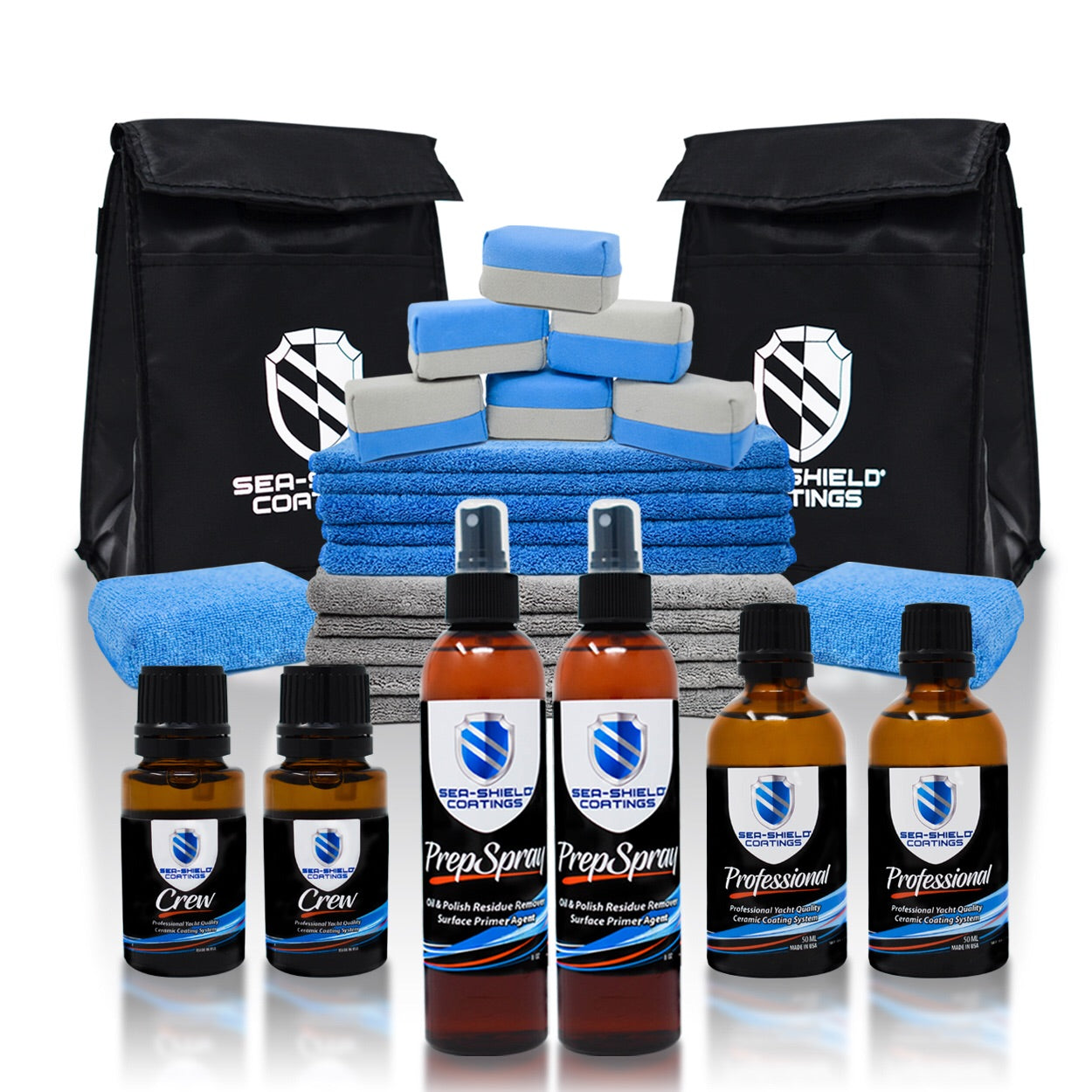






A complete boat buffing kit needs a variable-speed polisher, multiple compounds (heavy cut through fine polish), wool and foam pads, plus protective sealants. For lasting results, choose marine-specific products like Sea-Shield's three-step system that removes oxidation, restores shine, and protects against UV damage without endless reapplication.
What Is a Boat Buffing Kit?
A boat buffing kit combines the tools and compounds needed to remove oxidation and restore gelcoat or paint to its original shine. Unlike car detailing products, marine kits must handle tougher conditions. Saltwater accelerates oxidation. UV radiation at water level is more intense. The gelcoat itself behaves differently than automotive paint.
A proper kit includes several components working together. You need cutting compounds to remove oxidation, polishes to refine the surface, and protection to keep the shine lasting. The buffer itself matters too. Cheap household polishers burn through gelcoat or quit halfway through a job.
The confusion starts because boats oxidize at different rates. A covered freshwater boat might need light polishing once a year. A saltwater boat left in the sun can develop heavy chalk in months. One kit won't serve both situations equally well.

Why Does Your Boat Need Regular Buffing?
Gelcoat is a specialized resin layer that protects fiberglass. UV radiation and oxygen break it down at a molecular level, creating white, chalky oxidation in microscopic pores and cracks. The surface becomes rough and stops reflecting light properly.
Porous gelcoat absorbs stains. Salt deposits, waterline marks, and contaminants penetrate deeper. Left unchecked, severe oxidation can thin the gelcoat enough to require complete refinishing.
Regular buffing a boat reverses this. Compounds remove oxidized layers, polishes restore clarity, and sealants provide UV protection. Done correctly, results last 1-2 years.
But aggressive buffing removes gelcoat permanently. Each session takes off a thin layer. Gelcoat measures 15-20 mils thick when new and is thinnest at corners. Wrong products or technique can burn through to fiberglass.
How Do You Choose the Right Buffing Kit?
Start by assessing your boat's condition honestly. Light oxidation shows as slight dulling. Moderate oxidation has visible chalking. Heavy oxidation leaves powder on your hand when you touch it.
For light oxidation, you need a fine polish and minimal cutting action. Products like Sea-Shield Swirl Remover #3 handle this level without removing excess gelcoat. Apply with a foam pad at lower speeds and you'll restore shine without risk.
Moderate oxidation requires a polishing and buffing kit with medium-cut compounds. Sea-Shield Cut and Polish #2 removes light scratches and oxidation while being gentle enough not to burn through gelcoat. The formula stays lubricated, which prevents surface damage.
Heavy oxidation needs aggressive action. Sea-Shield Heavy Cut #1 removes severe oxidation and even 1000-grit sandpaper marks. But use this carefully. Heavy compounds remove more material, so you only want to work problem areas, not the entire boat.
The buffer itself matters as much as the compound. Look for variable speed control between 1200-1800 RPM. Lower speeds give you better control. Higher speeds generate heat that can damage gelcoat. Avoid single-speed buffers or anything marketed for general household use.
Pad selection changes based on the compound. Wool pads cut faster but can leave swirl marks if used incorrectly. Foam pads polish gently but won't remove heavy oxidation. A complete buffing polishing kit includes multiple pad types for different stages.
What Should a Complete Boat Buffing Kit Include?
A truly complete kit needs layered protection, not just surface restoration. Here's what actually works:
Compounds for Progressive Correction
Start with whatever cutting level your boat needs, but plan on multiple steps. Heavy oxidation requires Heavy Cut #1 initially, followed by Cut and Polish #2 to remove compound marks, finishing with Swirl Remover #3 for a swirl-free shine.
Each step removes the marks left by the previous compound while using progressively finer abrasives. Trying to jump from heavy cutting directly to wax leaves visible defects. The multi-step approach takes more time but delivers professional results.

Proper Buffing Pads
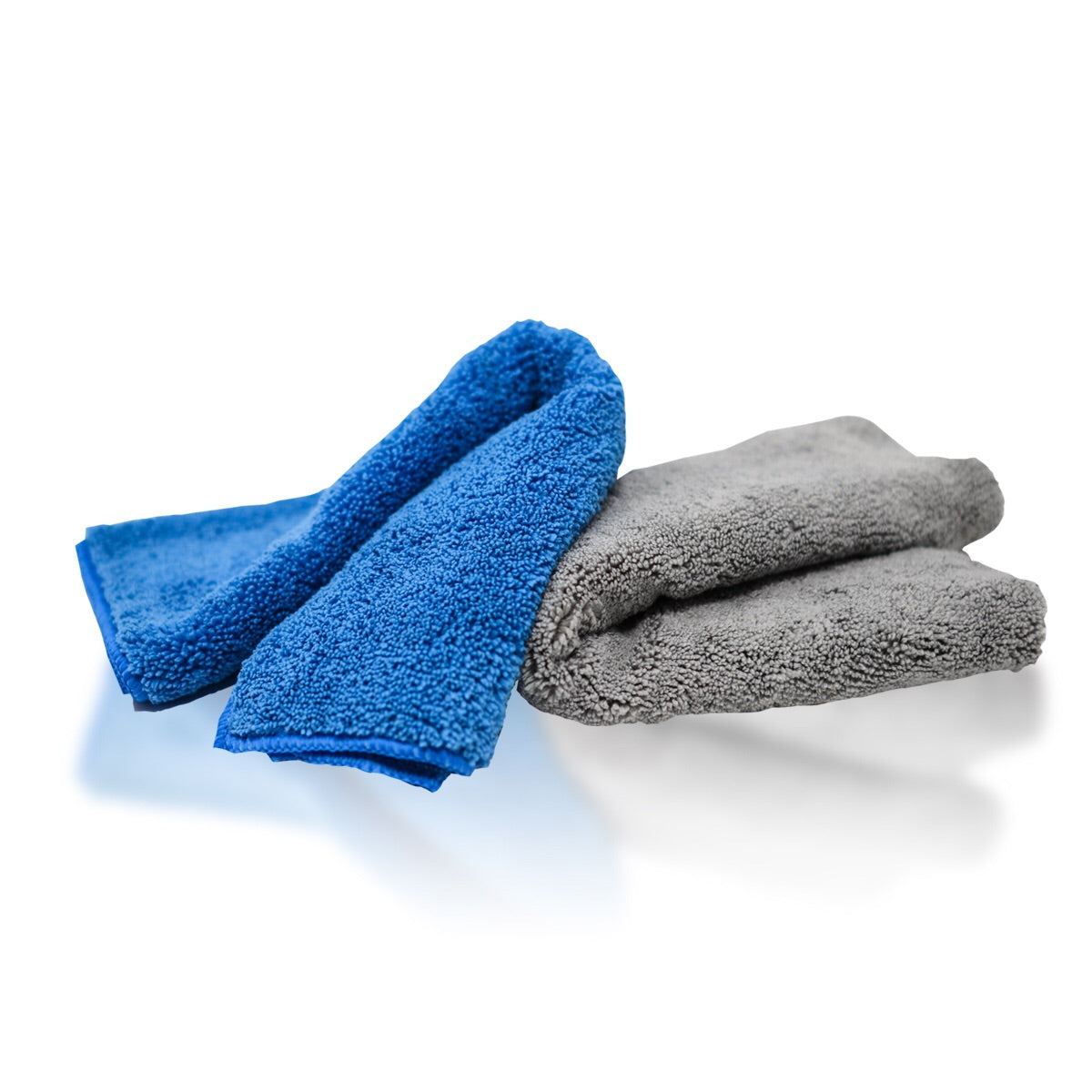
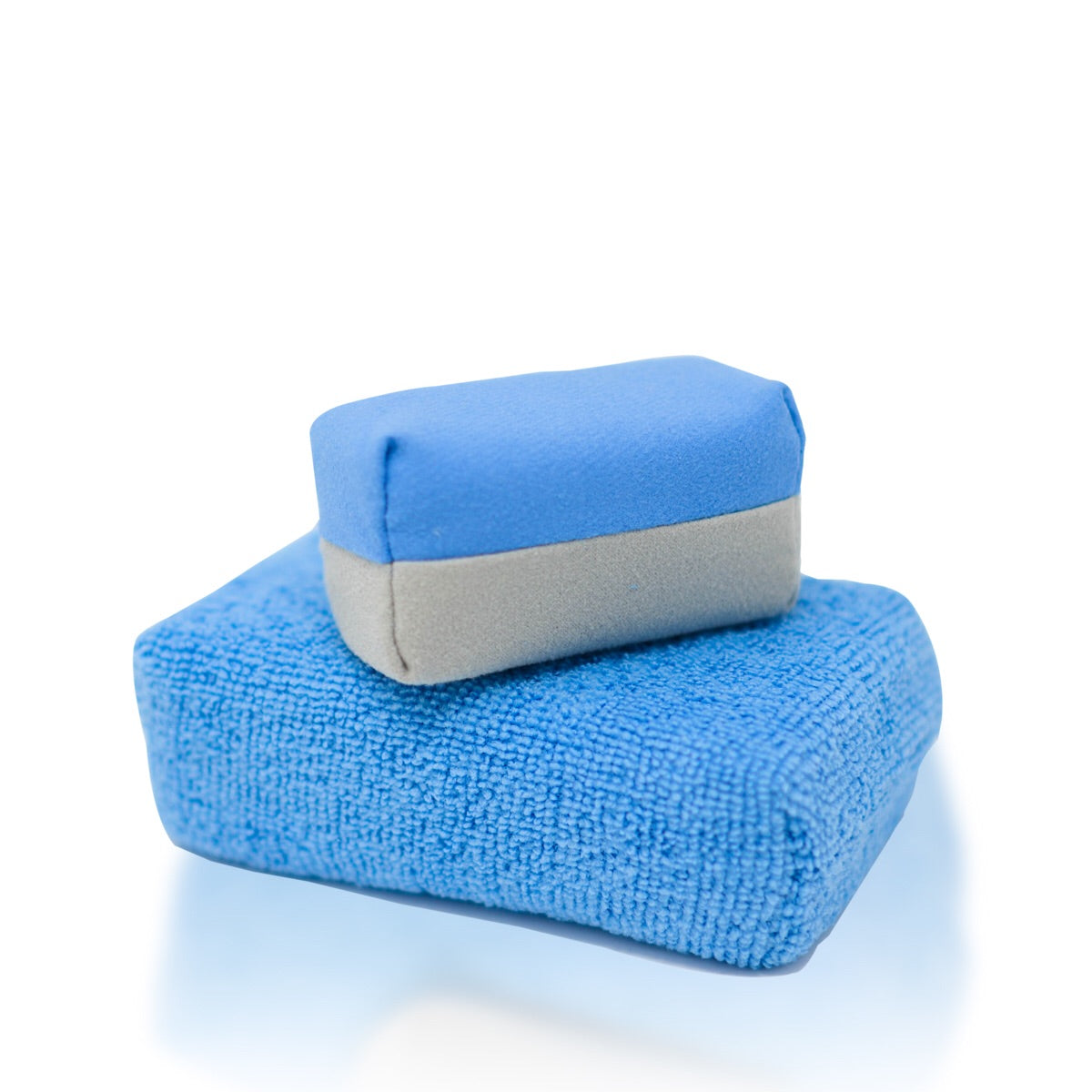
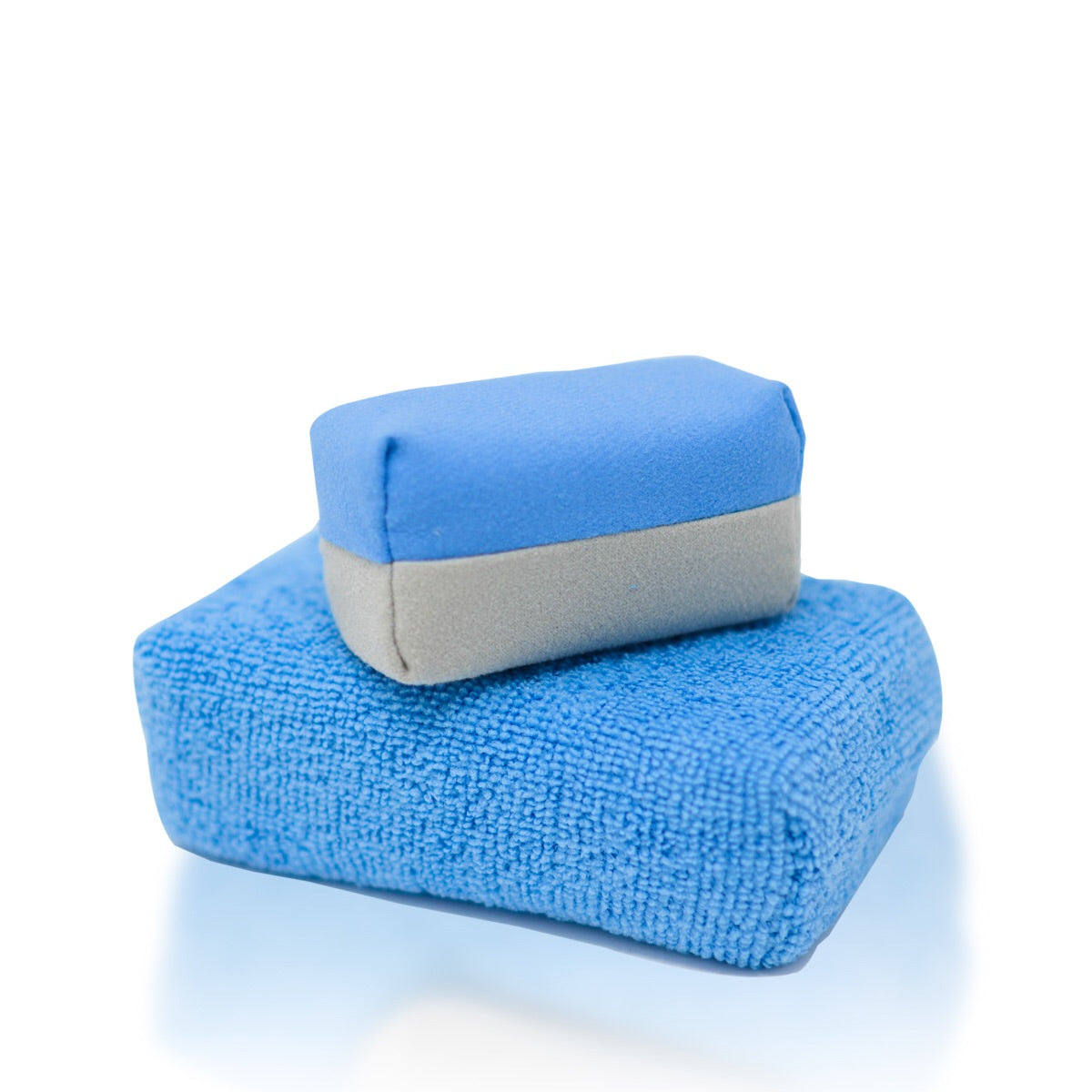
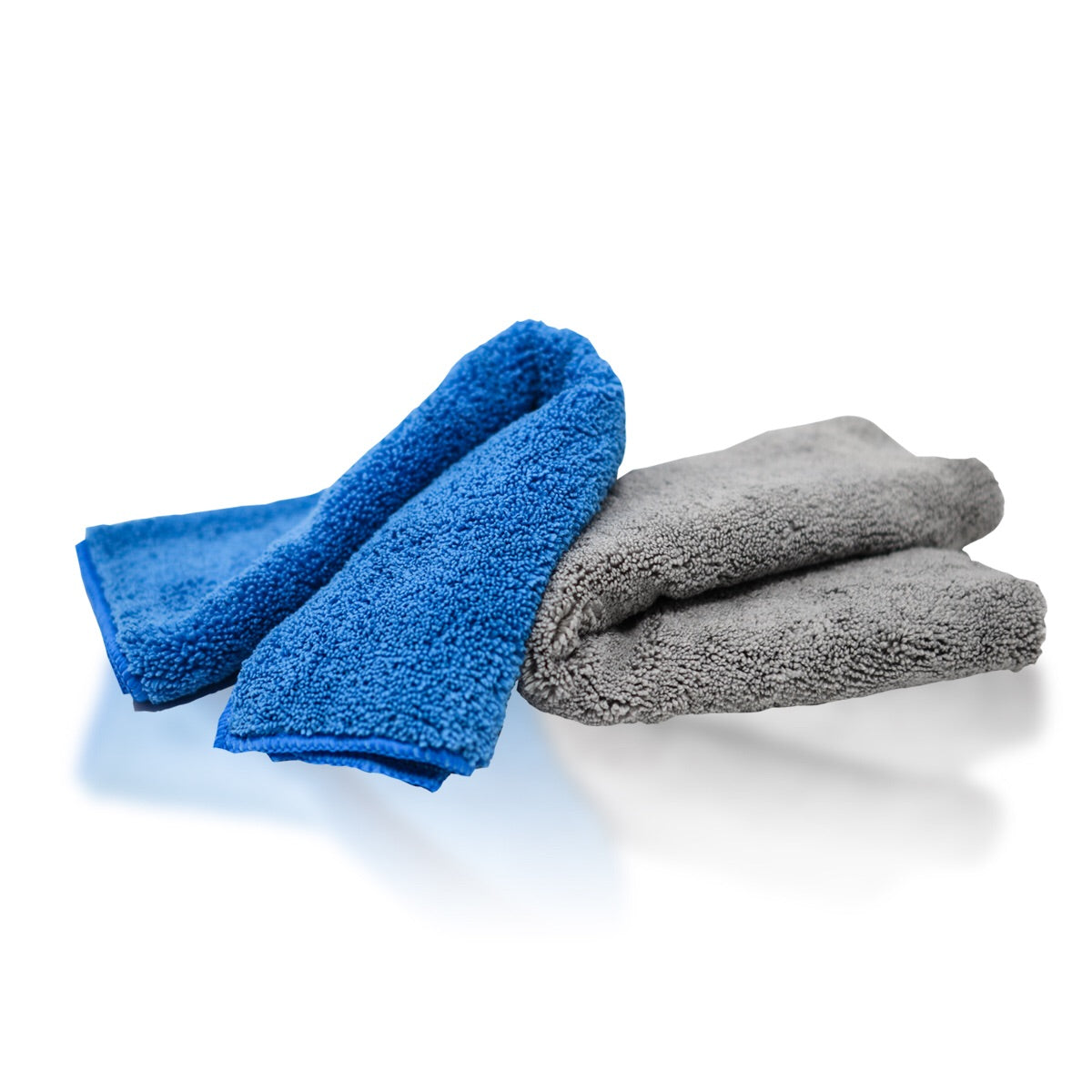
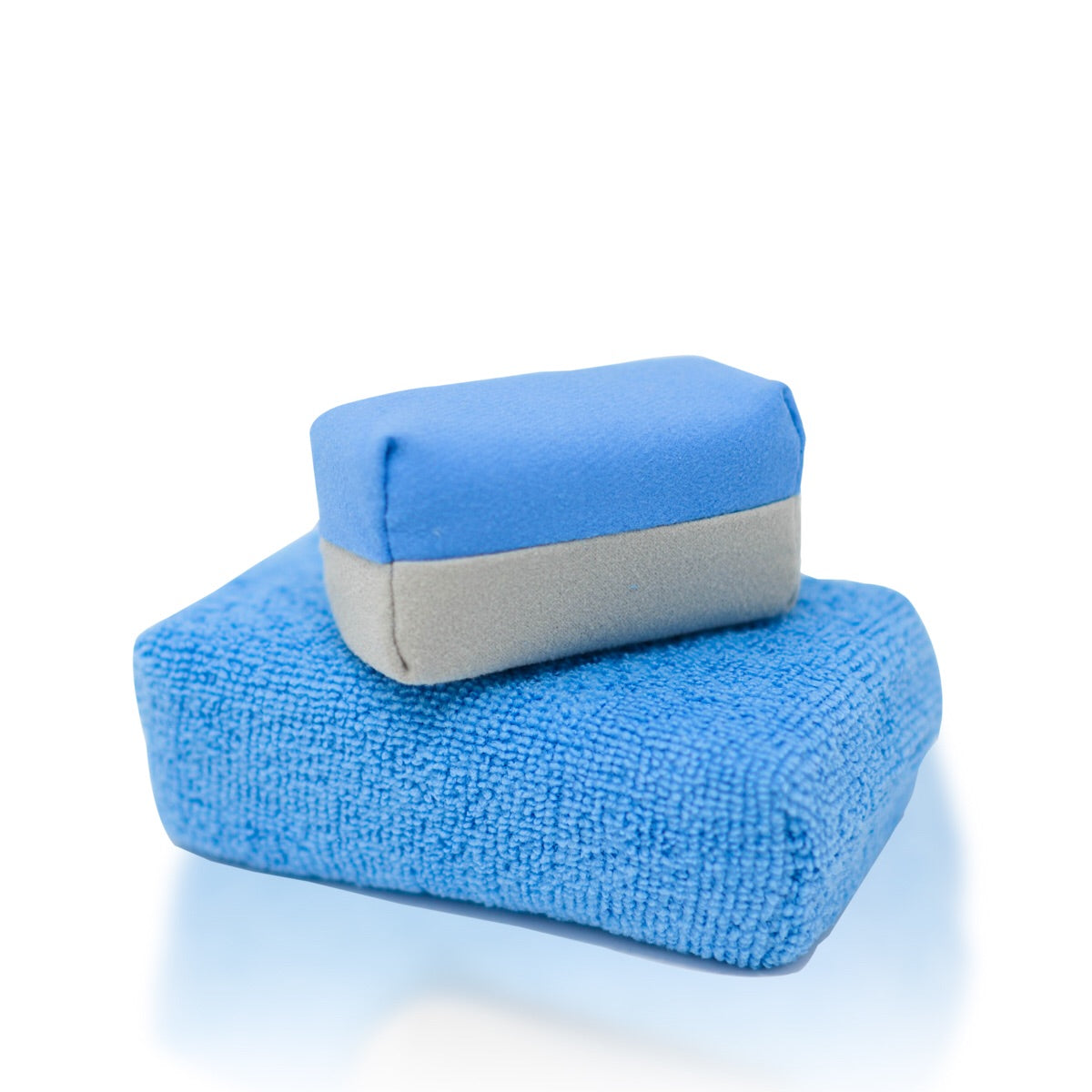
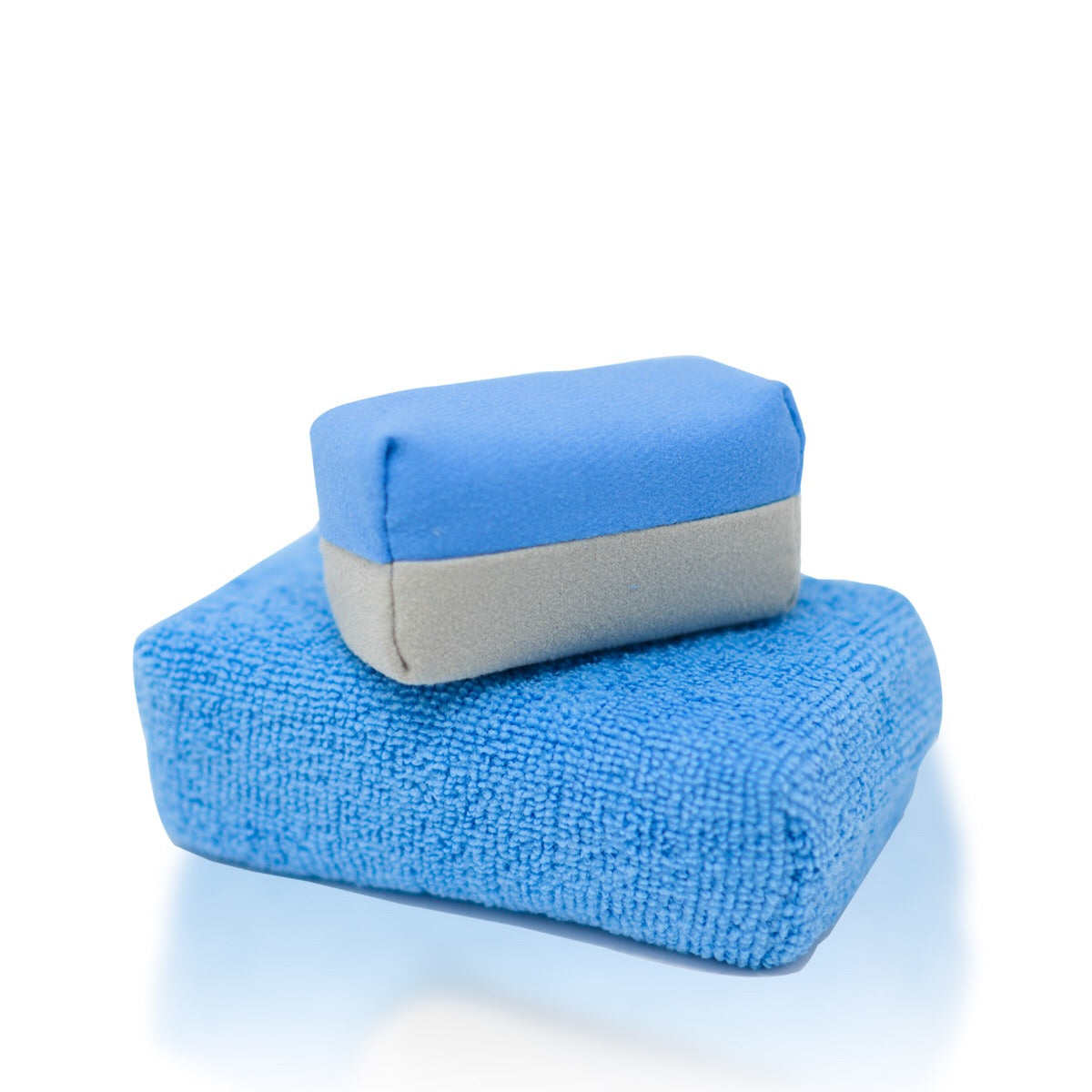
You need at least three pad types. Wool compound pads work with heavy and medium compounds for cutting action. Yellow foam polishing pads handle fine polishes and swirl removal. Soft microfiber applicators apply sealants and coatings by hand.
Backing plates matter too. The pad attaches to a backing plate that screws onto your buffer. Make sure your buffer uses standard 5/8-11 or 5/16-24 threads. Sea-Shield offers backing plates sized for different applications.
Surface Preparation Products
Before buffing, you need proper cleaning. Sea-Shield Boat Soap removes salt, dirt, and old wax without stripping protection or leaving residue. For water spots and mineral deposits, Rust Stain Remover dissolves calcium and salt buildup.
After polishing, Prep Spray removes polishing oils left behind. This step gets skipped often but makes a huge difference in how well protective coatings bond.
Long-Term Protection
This is where most boat buffing compound kits fall short. They restore shine but don't keep it. After hours of buffing, your boat looks amazing. Six weeks later, oxidation returns because you skipped protection.
Traditional paste wax offers some protection but needs frequent reapplication. Modern ceramic coatings like Sea-Shield Crew or Professional create a harder, longer-lasting barrier. These coatings bond at a molecular level and can last 1-2 years with proper maintenance.
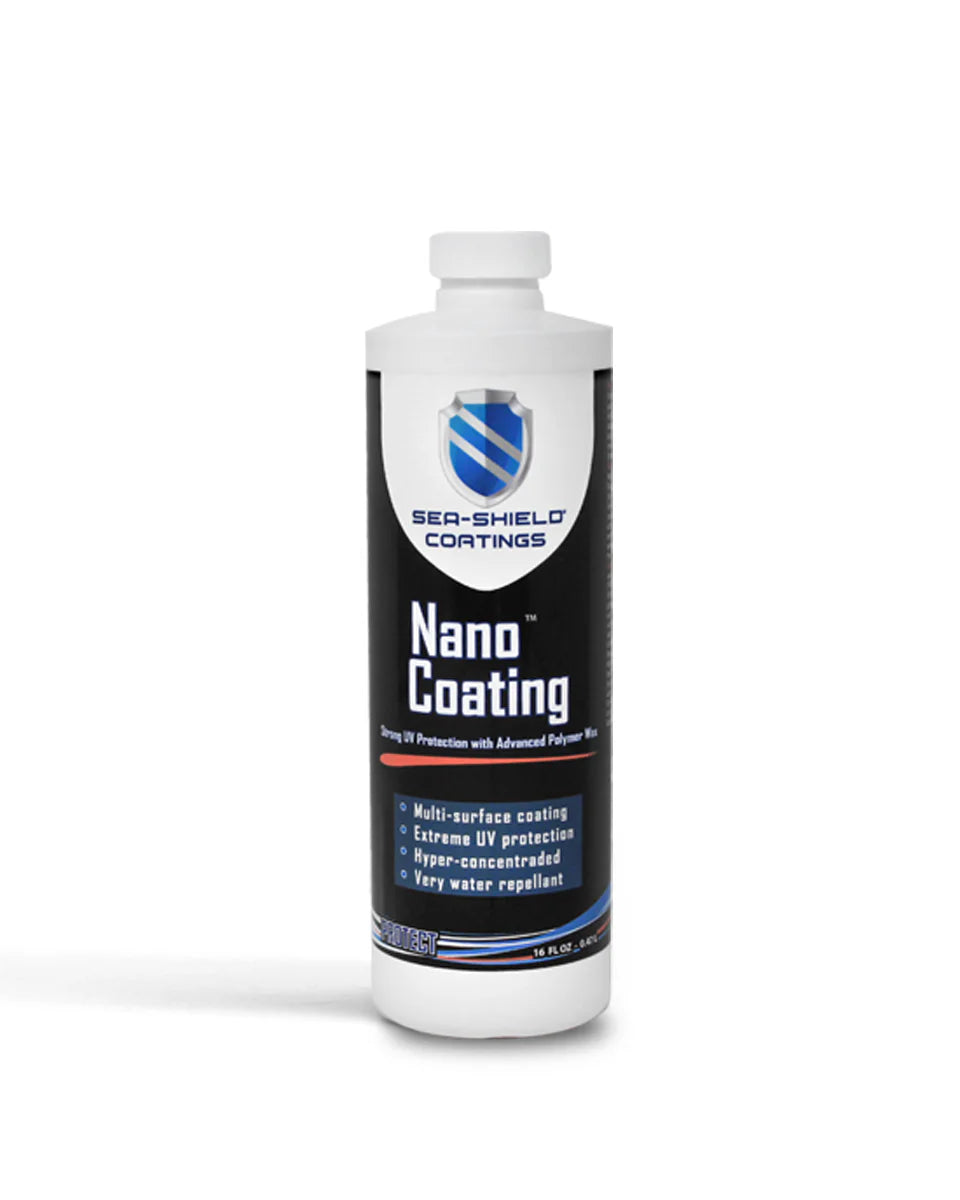
For maintenance between coatings, Nano Coating provides additional protection and makes cleaning easier. Final Shield works as a spray-on topcoat that refreshes the shine and adds UV protection.

When Should You Buff Your Boat?
Never buff in direct sunlight or on hot surfaces. Heat causes streaks. Work early morning, late afternoon, or on overcast days.
Most compounds work best between 60-80°F. Below that, they're too thick. Above 85°F, they dry too fast.
Buff in spring before launching and fall before storage. Southern climates may need twice-yearly buffing.
Watch for signs: water stops beading, or colours look faded compared to protected areas. Catch oxidation early for easier correction.
How Do You Actually Use a Buffing Kit?
-
Start with a completely clean surface. Wash with boat soap, then inspect under good lighting. Mark heavily oxidized areas with tape so you know where to focus aggressive compounds.
-
Attach the appropriate pad to your buffer. For first-stage cutting with heavy compound, use a wool pad. Apply compound directly to the pad, not the gelcoat. Use a quarter-sized amount for a 2x2 foot section.
-
Place the buffer flat against the surface before turning it on. Start at low speed, around 1200 RPM. Work in overlapping passes, moving slowly back and forth. Keep the pad flat. Tilting creates edge marks that take additional polishing to remove.
-
Watch the compound as you work. It should stay wet and creamy. If it dries out or starts to dust, you're either working too fast or need more product. Add small amounts as needed rather than loading up initially.
-
The compound changes appearance as you work. Initially cloudy, it gradually clears as oxidation breaks down. When the section looks uniform and clear, move to the next area. Don't overwork any spot, or you'll generate heat and potentially damage the gelcoat.
-
After completing the cutting stage with heavy or medium compound, the surface looks better but shows fine scratches from the compound itself. This is normal. Switch to your polishing compound and a fresh pad. Repeat the same technique at similar speeds.
-
The final polish removes swirl marks and brings out a deep shine. Use Swirl Remover #3 with a soft foam pad at slightly higher speeds, around 1500-1800 RPM. This step goes faster because you're refining, not cutting.
-
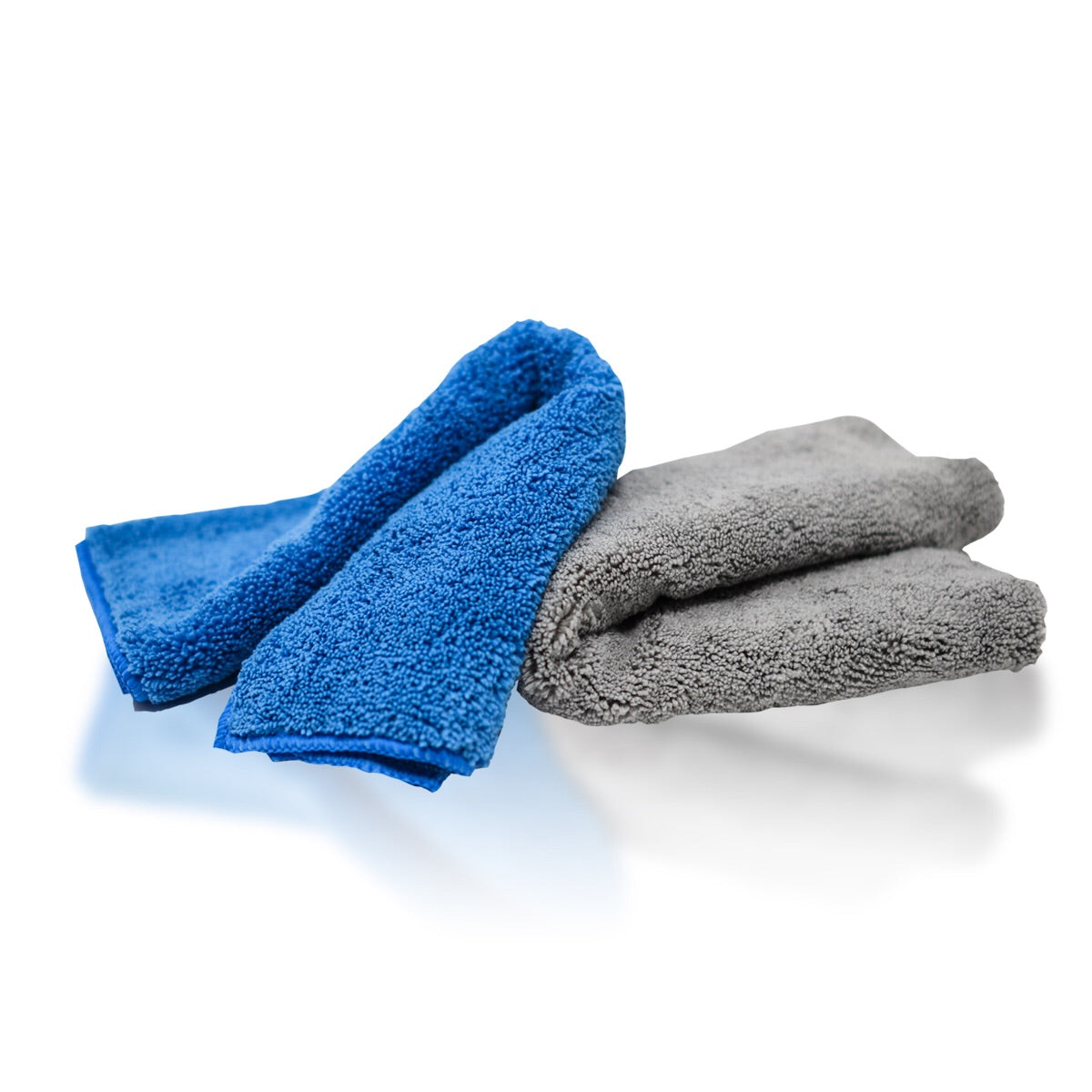
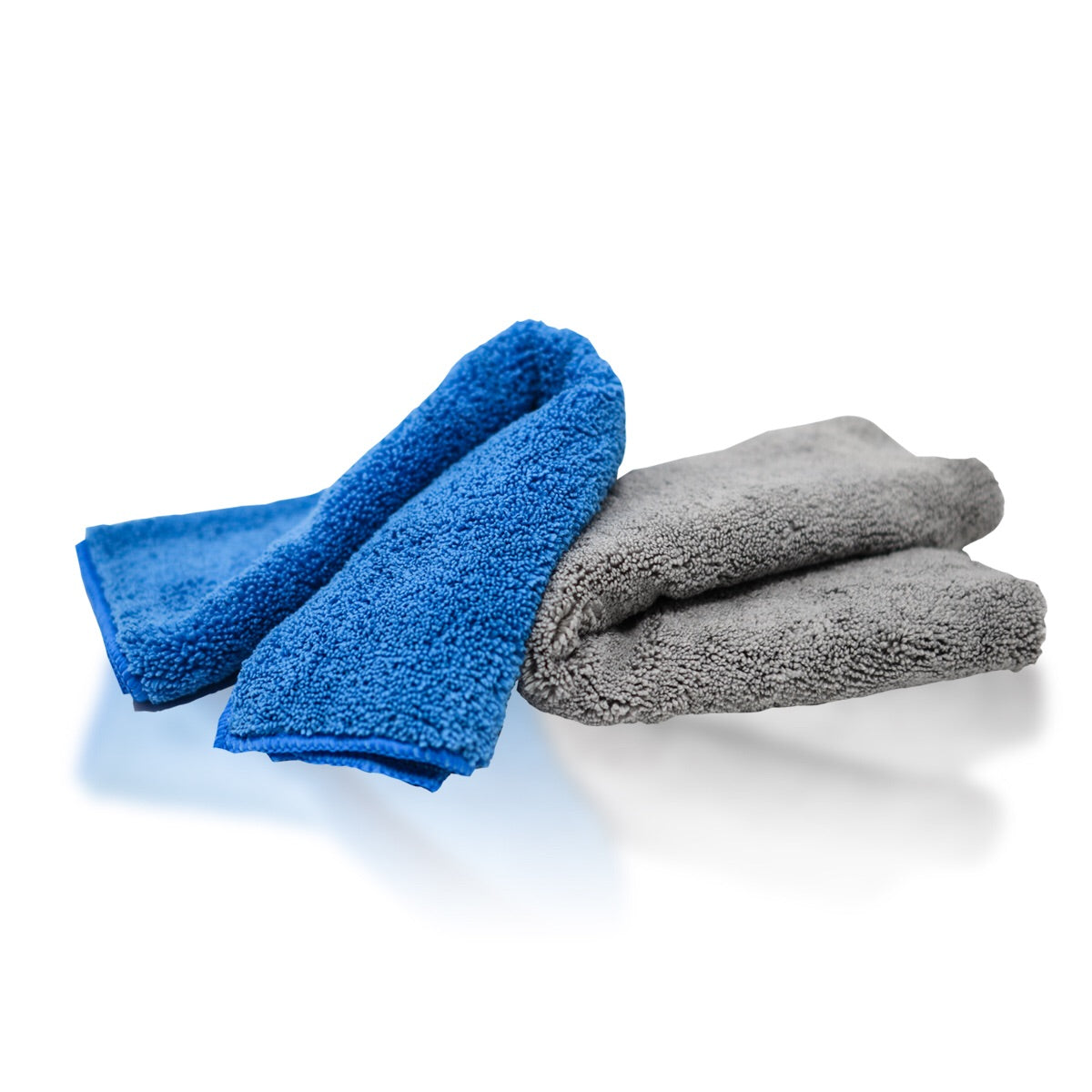
Between each stage, wipe the surface with a clean microfiber towel. Check your work under different lighting angles. Swirl marks and haze show up clearly in certain light but disappear in others. Move around the boat to inspect from multiple angles.
What About Stainless Steel and Metal Surfaces?
Boats have extensive stainless steel railings, cleats, and hardware. These oxidize differently than gelcoat but still need attention. Regular stainless buffing kit products often contain harsh abrasives unsuitable for marine-grade stainless steel.
Sea-Shield Metal Polish is formulated specifically for marine metals. It removes oxidation, water spots, and salt buildup without excessive abrasion. Apply by hand using a microfiber cloth, working in circular motions.
For heavily oxidized stainless, you might need to start with a light cutting compound before switching to metal polish. The same three-step process works: cut, polish, protect. After polishing, apply Nano Coating to stainless surfaces. This creates a barrier that repels water and makes future cleaning easier.

Where Do Most People Go Wrong?
-
Using automotive products. Car waxes are designed for paint, not gelcoat. Marine products handle gelcoat's porosity and harsh saltwater conditions.
-
Rushing protection. Hours of buffing followed by cheap wax that breaks down in weeks wastes effort. Proper ceramic coating adds 30 minutes but extends results by months or years.
-
Inconsistent pressure. Pressing too hard burns gelcoat. Too light wastes time. Let the buffer's weight do the work and guide it smoothly.
-
Dirty pads. Loaded pads spread oxidation residue instead of cutting. Switch pads frequently. Wash and reuse them between sessions, not during.
-
Skipping prep after polishing. Polishing oils interfere with coatings. Prep Spray removes oils and ensures bonding. This two-minute step makes coatings last months instead of weeks.
How Long Do Results Last?
This depends entirely on protection. Compound and polish alone give you a few weeks of shine before oxidation returns. Add traditional paste wax, and you might get 2-3 months. Modern ceramic coatings extend that to 12-24 months.
Environmental factors matter too. A covered boat in freshwater will maintain shine longer than an uncovered boat in saltwater. Boats in southern latitudes face more UV exposure than those in northern waters. Darker colors show oxidation faster than white or light colors.
Maintenance between major buffing sessions makes a huge difference. Wash regularly with proper boat soap. Use a spray sealant like Final Shield every few weeks to refresh protection. These simple steps can double the time between full buffing jobs.
The goal isn't to make buffing last forever. It's to make the interval between buffing sessions reasonable. Once or twice a year is manageable for most boat owners. Every month or two becomes a burden that leads to neglect.
What's the Best Buffing Compound for Boats?
This question has no single answer because "best" depends on oxidation severity. For heavily oxidized boats, Sea-Shield Heavy Cut #1 removes the most material quickly. But using heavy compound on a boat that only needs light polish removes unnecessary gelcoat.
The truly best approach uses a progressive system. Start with the least aggressive compound that makes visible progress. If moderate compound isn't working after a few passes, step up to heavy cut. Once you've removed oxidation, step back down through the grades to refine the finish.
Quality matters more than strength. Cheap compounds contain abrasives that stay aggressive throughout use. Professional marine compounds like Sea-Shield's formulas use abrasives that break down as you work. They start strong but finish fine, reducing the need for multiple products.
Conclusion
You now understand what separates a working boat buffing kit from marketing hype. The right kit matches your boat's condition, includes proper protection, and uses quality marine-specific products.
For boats with light oxidation, start with Sea-Shield's polishing system and finish with Crew Ceramic Coating. Moderate to heavy oxidation needs the full compound progression followed by Professional Ceramic for maximum durability.
Don't forget the accessories. Multiple buffing pads, proper backing plates, and quality microfiber towels make the job easier and deliver better results.
FAQs
Q. Can I use a car buffer on my boat?
Variable-speed orbital car buffers work fine for boats, but rotary buffers designed for automotive paint can burn through gelcoat quickly. If using a car buffer, keep speeds between 1200-1800 RPM and use marine-specific compounds. Automotive compounds are often too aggressive for gelcoat.
Q. How often should I buff my boat?
Once or twice yearly for most boats, depending on exposure. Covered boats in freshwater might need buffing every 18-24 months. Uncovered boats in saltwater might need attention every 6-12 months. Let the condition guide you more than the calendar.
Q. Can buffing remove deep scratches?
It depends on scratch depth. Surface scratches and light gouges can often be buffed out. Deep scratches that penetrate through the gelcoat color layer require filling with gelcoat repair compound before buffing. If you can catch your fingernail in the scratch, it probably needs repair rather than buffing alone.
Q. What's the difference between buffing and polishing?
Buffing typically refers to the overall process of restoring shine, while polishing specifically means using finer abrasives to refine the surface after cutting compounds remove oxidation. In practice, people use the terms interchangeably. What matters is using progressively finer products to achieve the final shine.
Q. Do I need different products for painted surfaces versus gelcoat?
Modern marine paints and gelcoats respond similarly to quality buffing products. However, painted surfaces are typically thinner than gelcoat and require gentler treatment. Start with less aggressive compounds on paint. Sea-Shield's three-step system works on both surfaces when used appropriately for the condition.