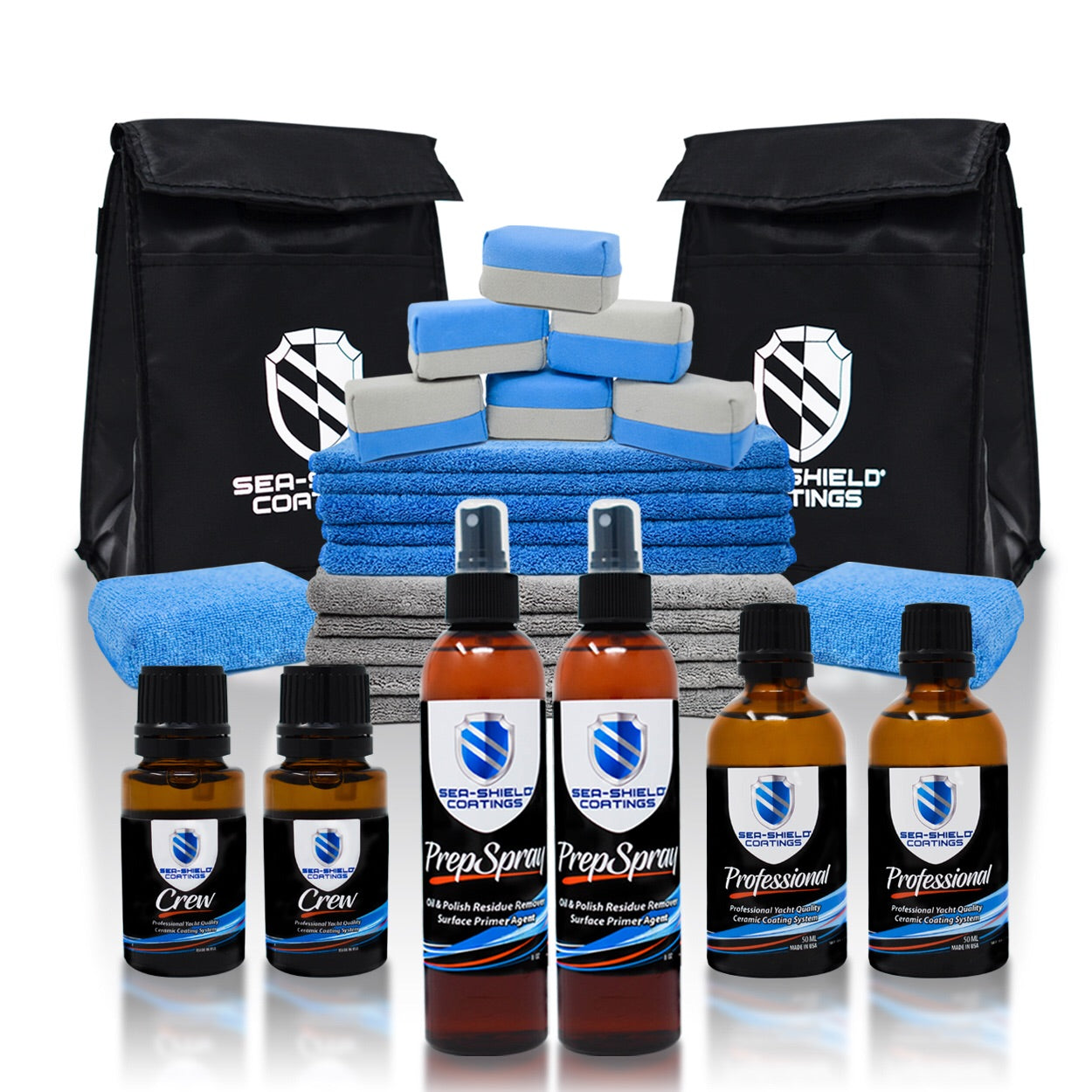





Choose nano coating for a fast, budget-friendly seal that lasts months. Choose a cleaner wax like Sea-Shield's Nano Cleaner Wax for quick one-step cleaning and shine on lighter maintenance jobs. Choose ceramic coating (Crew or Professional) when you want multi-year protection against UV, salt, and oxidation on paint or gelcoat.
What's the Real Difference Between Nano Coating, Wax, and Ceramic Coating?
Boat owners mix these terms up constantly, and it costs them money when they buy the wrong product.
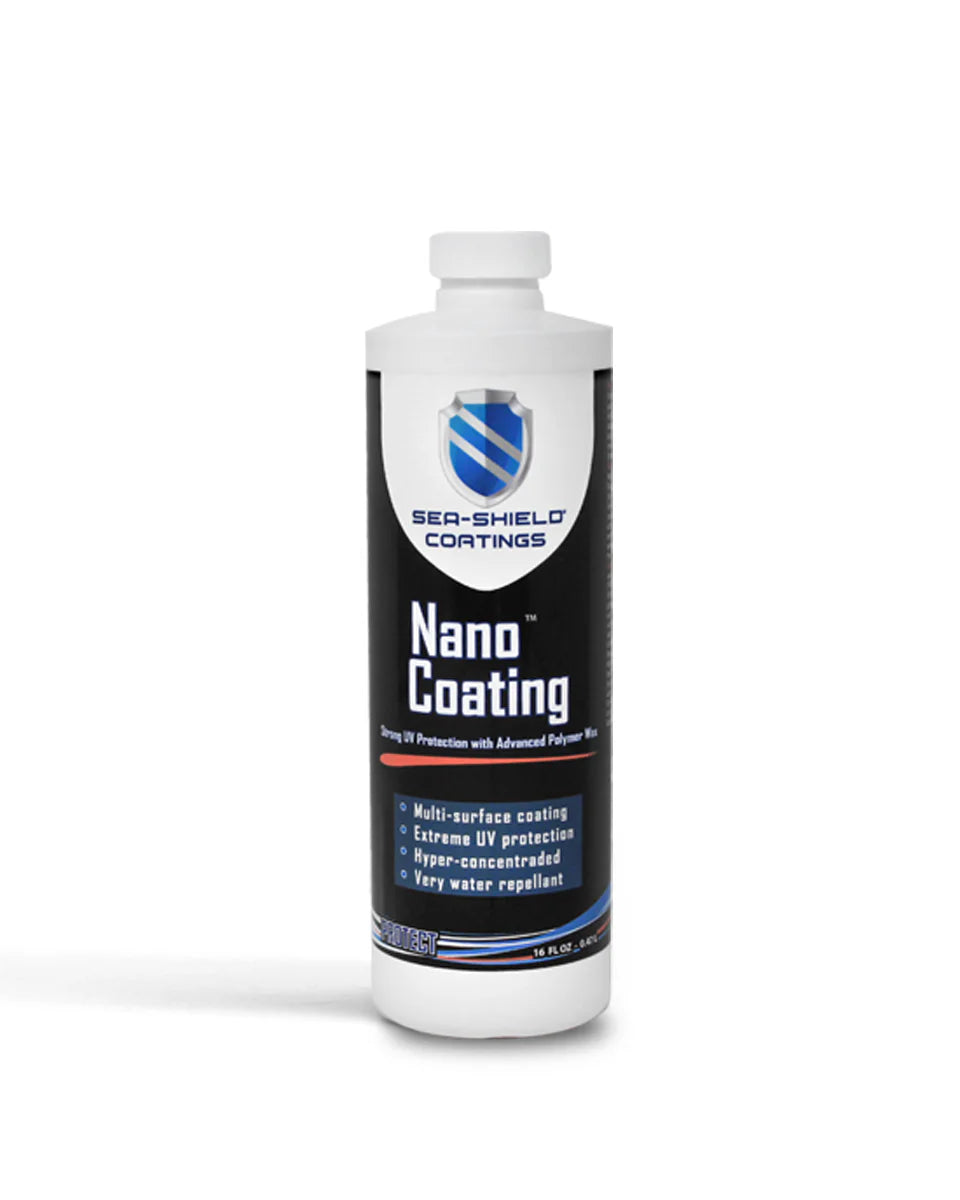
Nano coating is a liquid polymer sealant. You wipe it on, buff off the excess, and it bonds to the surface to repel water and block UV. Sea-Shield's version has been in their lineup for close to a decade. It's not a full ceramic system. Francisco from Sea-Shield describes it as their most cost-effective protectant, since one application covers a large surface area for the price.

Wax, or more specifically a cleaner wax, works differently. It's a one-step product built to clean, polish, and protect in a single pass. Sea-Shield's Nano Cleaner Wax removes corrosion, water spots, and light scratches while sealing the surface, and it carries the same exhaust-resistant technology found in their standalone Exhaust Guard product.
Ceramic coating is the long-term option. It's a harder, more durable layer that bonds to paint or gelcoat and resists oxidation, UV fading, and rust for years rather than months.
When Should You Use Nano Coating Instead of Wax?
Nano coating makes sense when you want protection fast without a full detailing session. It goes on a clean, dry surface and takes minutes. It works on paint, gelcoat, stainless steel, vinyl, rubber, and acrylic, which makes it useful across a whole boat rather than just the hull.
Where it falls short: it's not a scratch-hiding product, and it's not designed to correct oxidation. If your gelcoat already looks chalky, nano coating seals in the dullness rather than fixing it. Polish first, then apply nano coating.
Related product: Sea-Shield also makes Exhaust Guard, a polymer-based sealant originally built to stop exhaust residue and black streaks from sticking to the hull. It works well enough as a standalone protectant that Sea-Shield never developed a separate traditional wax around it. It repels acid rain, salt air, and industrial fallout too.
When Does a Cleaner Wax Make More Sense?
If you want cleaning and protection in one pass, especially for regular maintenance rather than a full restoration, a cleaner wax fits better than nano coating alone. Sea-Shield's Nano Cleaner Wax cleans, shines, and protects paint, gelcoat, and plastic in a single application, and its built-in Exhaust Guard technology adds resistance to streaking and residue.

This is the product Sea-Shield recommends for interior sections of a boat or for owners who want a quick, effective pass without running a full compound and polish system first.
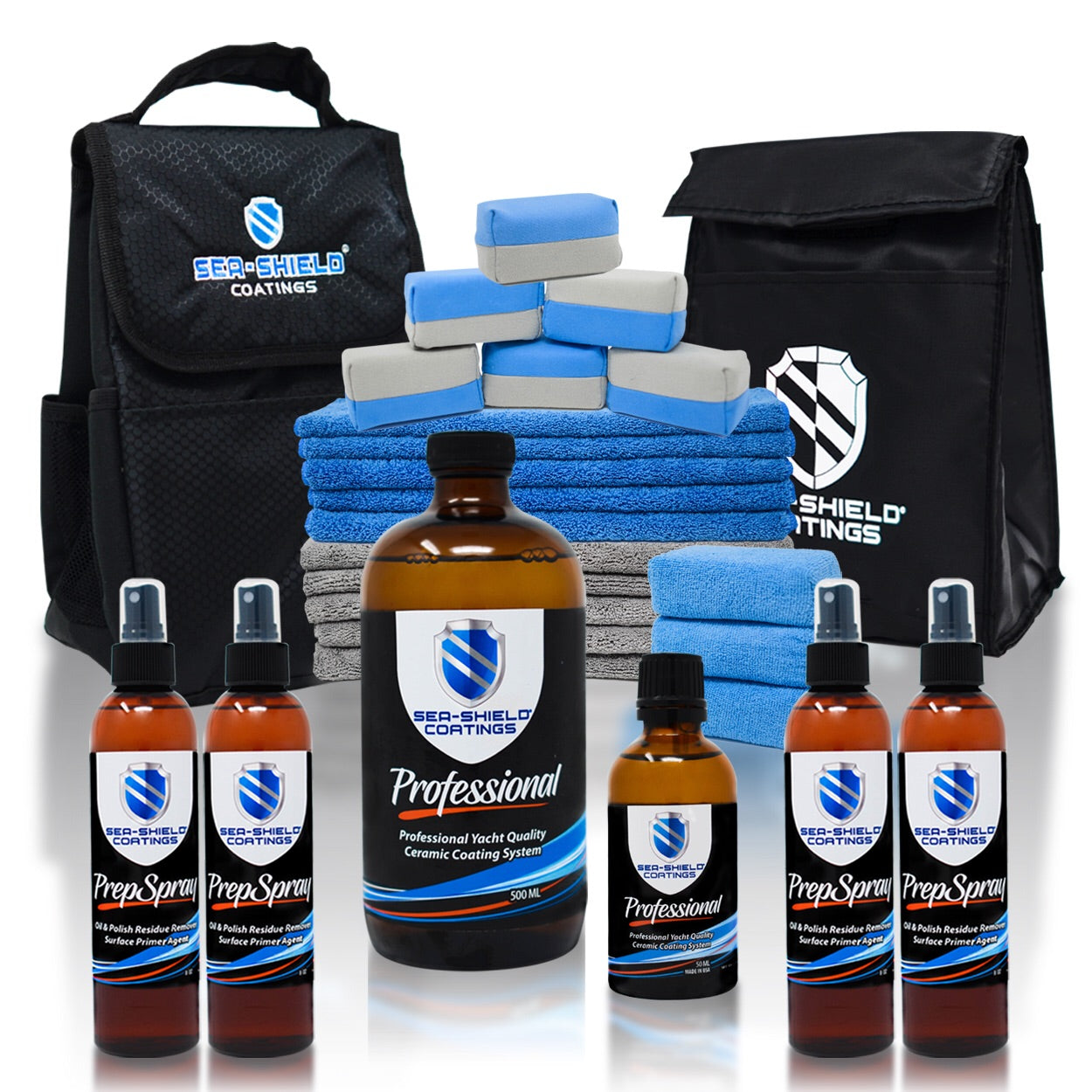
How Do Crew and Professional Ceramic Coatings Compare?
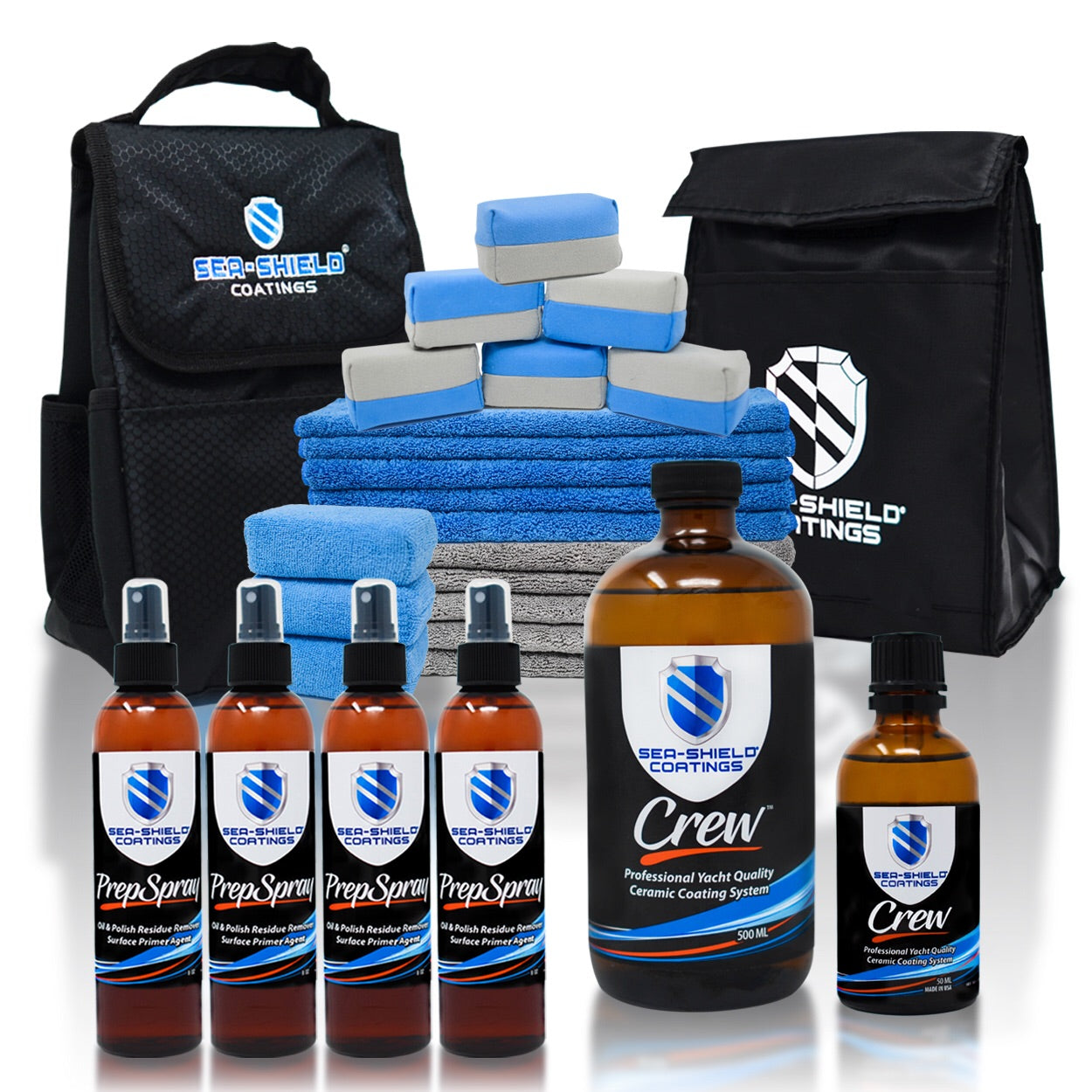
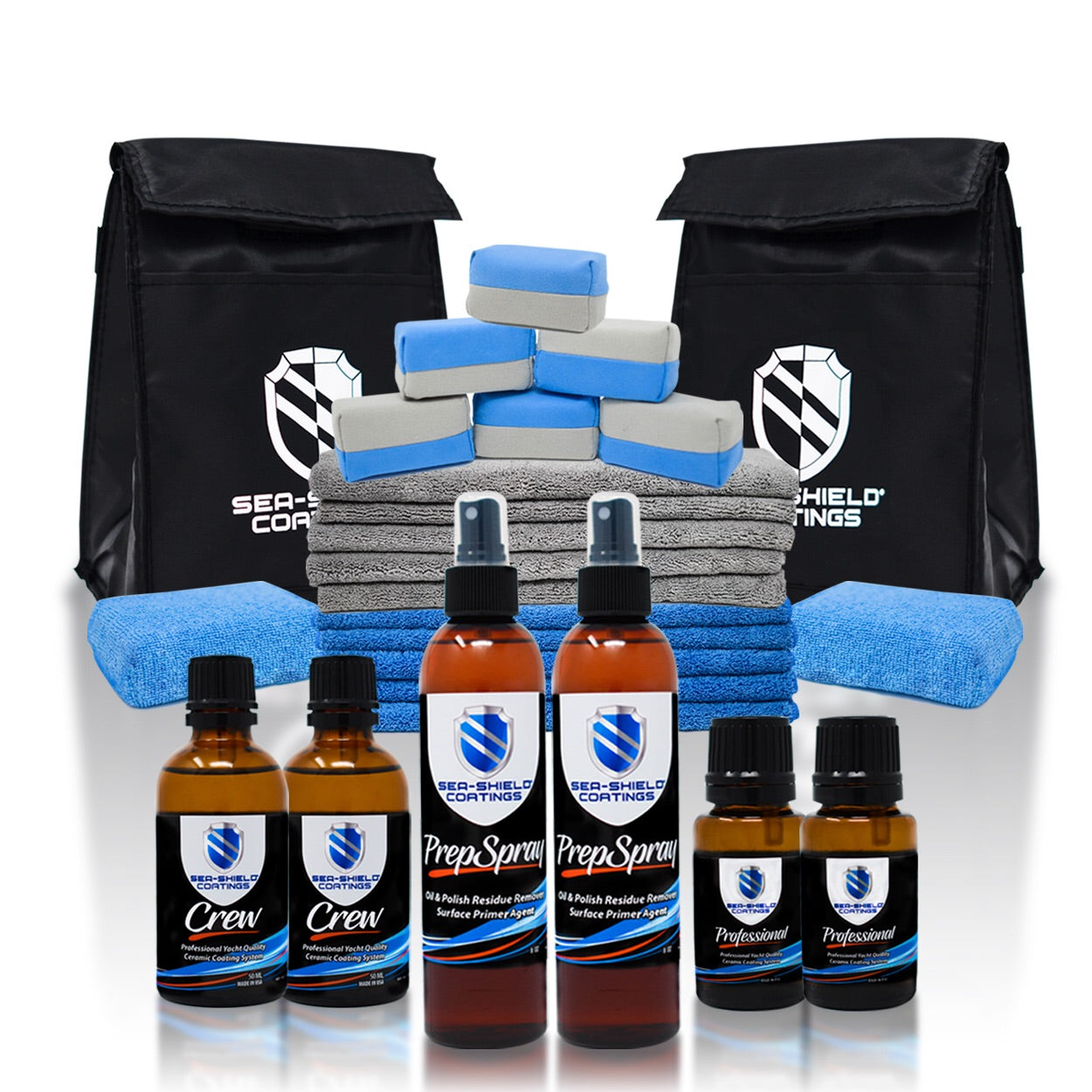
Once you're past nano coating and wax territory, ceramic coating is the step up. Sea-Shield offers two tiers:
Feature |
||
Best for |
DIY owners, onboard crew |
Professional detailers |
Application |
Easier to wipe on and off |
Slightly harder to apply, stronger bond |
Protection length |
1-2 years or more |
Longer-lasting, higher durability |
Surfaces |
Paint, gelcoat, fiberglass, aluminium, metal |
Paint, gelcoat, fiberglass, aluminium, metal |

Crew is the friendlier option if you're maintaining your own boat without professional training. Professionals deliver a stronger result but take more skill and time to apply correctly.
What Is PolyCeramic and Should You Add It?
PolyCeramic is Sea-Shield's booster additive. A few drops mixed into Exhaust Guard, Cleaner Wax, or even Final Polish increase durability and stretch coverage further. Francisco calls it a product that makes existing protectants "phenomenal" because it turns a standard wax pass into something closer to a one-step ceramic application.
If you already use Exhaust Guard or Cleaner Wax regularly, adding PolyCeramic is a low-cost way to extend the life of what you're already doing, rather than switching products entirely.

Watch It in Action
Francisco walks through Sea-Shield's full protection lineup, including nano coating, Exhaust Guard, PolyCeramic, Cleaner Wax, and the Crew versus Professional ceramic coatings, and explains how each one fits into a boat's care routine.
FAQs
1. Can I use nano coating and ceramic coating together?
Not as a layered combination on the same surface pass. Ceramic coating is the primary protective layer. Nano coating works better as a standalone sealant on surfaces you're not ceramic coating, or as a quick refresh between full ceramic applications.
2. Is Sea-Shield Cleaner Wax the same as traditional car wax?
No. It's built specifically for marine surfaces and includes Exhaust Guard technology for resistance to exhaust residue and streaking, which a standard automotive wax doesn't address.
3. Do I need to polish before applying nano coating?
Yes, if the surface is oxidized or scratched. Nano coating seals whatever condition the surface is already in. Compounding and polishing first gives you a better long-term result.
4. What's the actual difference between Crew and Professional ceramic coatings?
Crew is easier to apply and built for DIY use, with 1-2 years of protection. Professional is stronger and longer-lasting but takes more experience to apply cleanly.
5. Does PolyCeramic replace ceramic coating?
No. It's an additive that boosts other products like Exhaust Guard, Cleaner Wax, and Final Polish. It doesn't function as a standalone ceramic coating on its own.