Boat Polishing Compounds: How Sea-Shield Restores and Protects Your Boat's Shine
A good boat polishing compound removes dullness, oxidation, and light scratches while bringing back deep shine and long-lasting surface protection. When you compound and polish a boat correctly, the finish looks newer, cleans easier, and stands up better to salt, sun, and water exposure.
What is a boat polishing compound (or boat compound and polish)?
A boat polishing compound (also called a boat compound and polish) is a specialized abrasive-based liquid or paste designed to restore the exterior surfaces of a boat, gel coat, fiberglass, painted surfaces, and even metal or glass by removing surface flaws such as oxidation, chalkiness, light scratches, swirl marks, or water stains. The compound works by gently abrading away the damaged top layer and revealing a fresh, smooth surface underneath.
With Sea-Shield products the process becomes safer and more effective because the formulas use micro-abrasives engineered to cut through oxidation or stains without damaging the underlying material.
In short: a good boat polish compound cleans, levels out, and brings back shine; it does more than just buffing.
How do boat compounding and polishing work?
When you compound and polish a boat, you follow a controlled, step-by-step process:
Surface inspection and cleaning: First, you rinse and wash the boat thoroughly to remove salt, grime, mineral deposits or dirt. This ensures that abrasive particles don’t scratch the surface during polishing.
Compounding: If the gel coat looks chalky, faded, or shows visible oxidation or scratches, you apply a heavy-cut or medium-cut compound. These are more abrasive and remove the damaged outer layer. For example, Sea-Shield’s Medium Compound is designed for marine paints, gel coats or clear coats and removes light scratches and swirls while finishing nearly swirl-free.
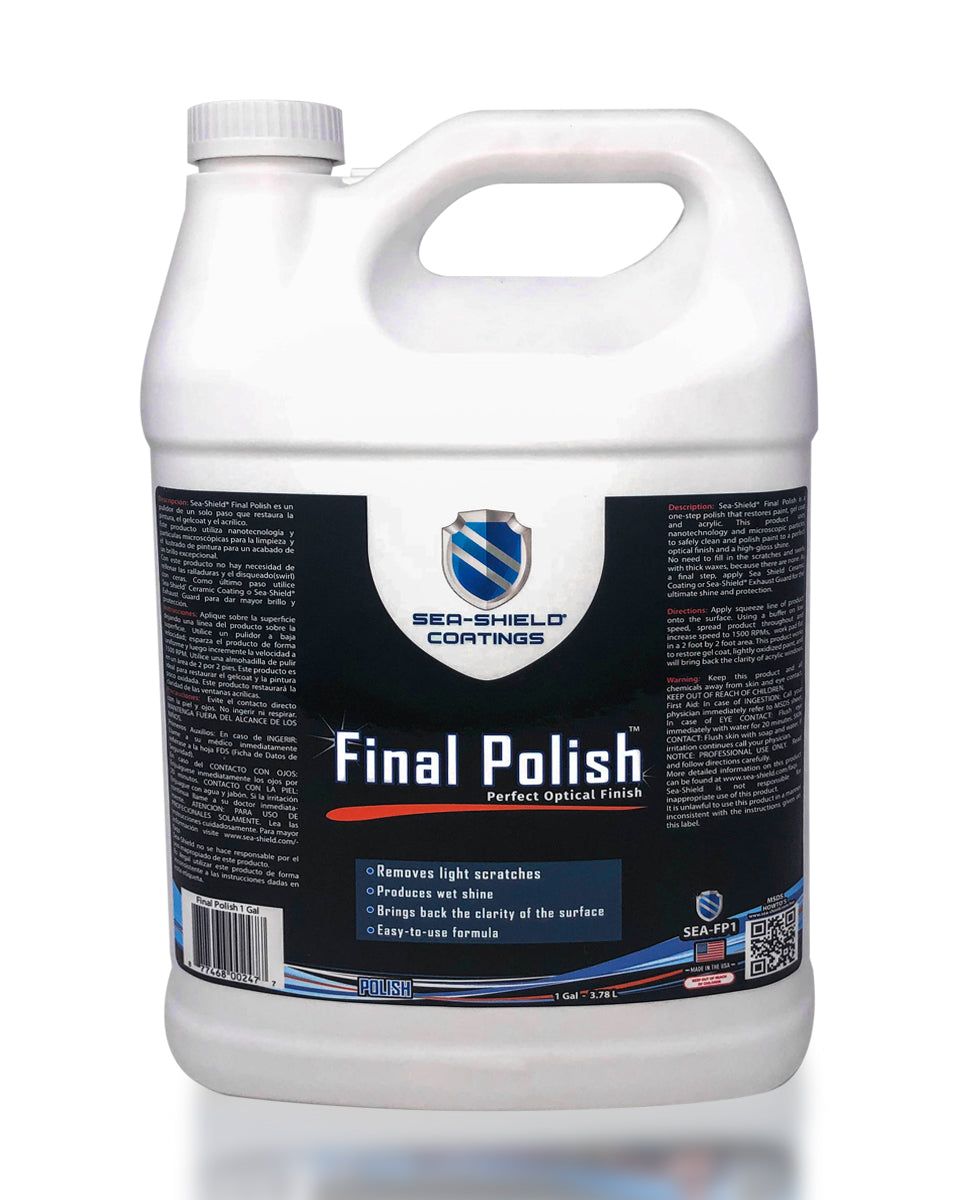
Polishing / fine polish: After compounding, you use a finer polish to refine the surface, smooth out micro-scratches, and restore gloss. This step enhances clarity, depth of shine, and preps the surface for final protection. Sea-Shield’s Final Polish serves this purpose.
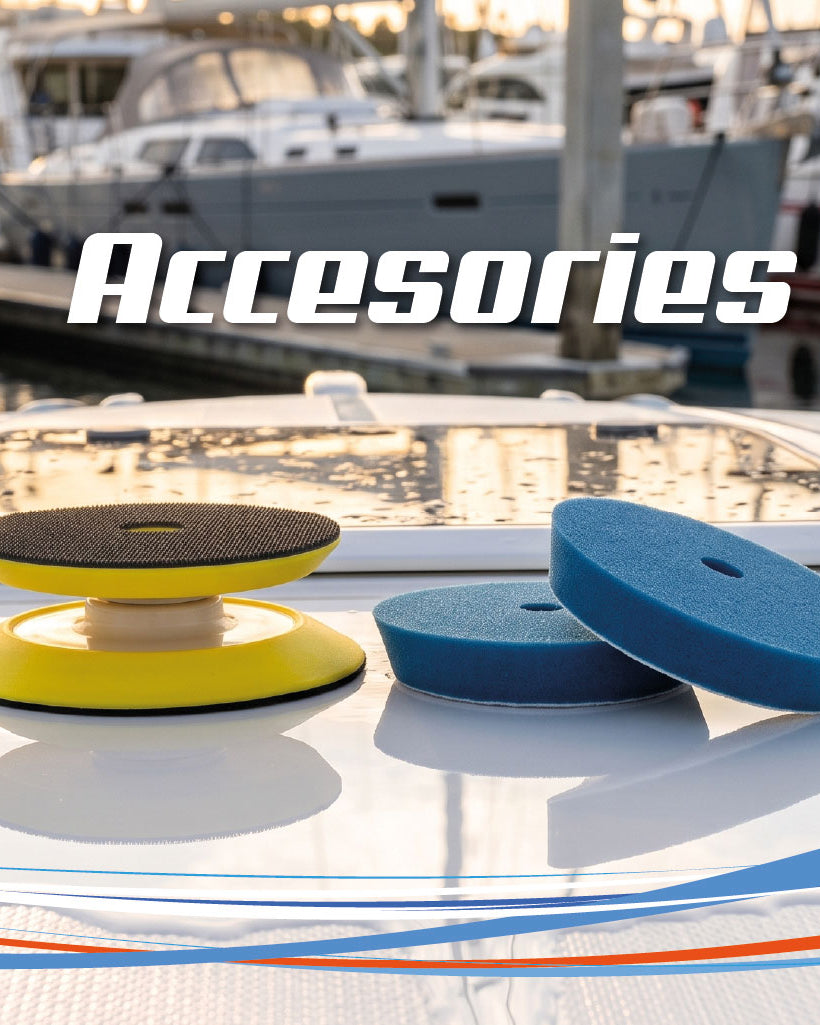
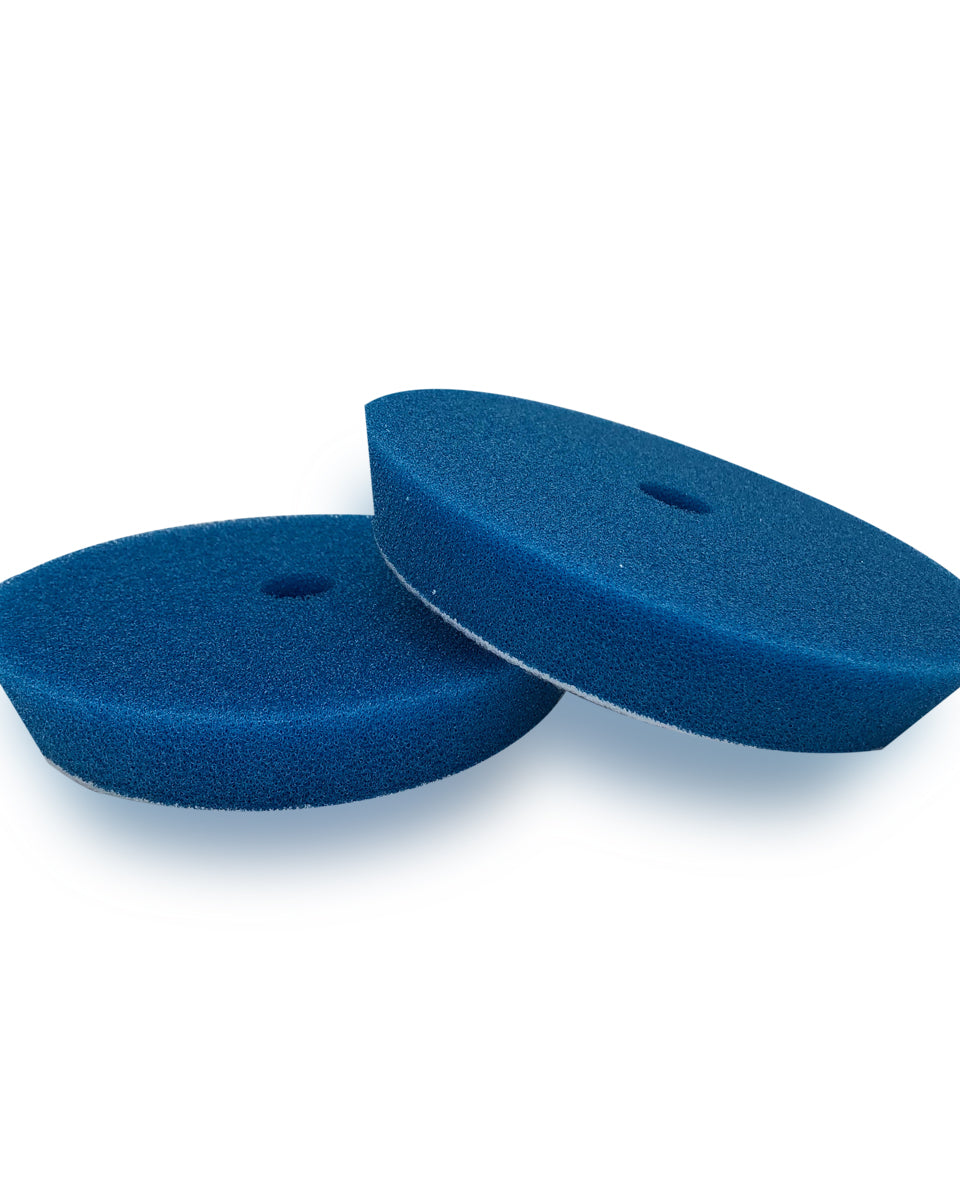
Buffing and finishing: Use proper buffing pads (wool or foam depending on condition) and a rotary or dual-action polisher to evenly work the compound or polish. Keep the pad flat to avoid swirl marks or an uneven finish. Many professional detailers also follow with a protective coating or wax to seal the surface.
Protection and maintenance: After polishing, applying a protective coating (wax, sealant, or ceramic coating) helps lock in shine and guard against UV, saltwater, oxidation and water intrusion, extending the time between polish sessions. Sea-Shield also offers such protective coatings as part of a full surface-care system.
Restores appearance — brings back gelcoat or painted surfaces from a faded, chalky, or oxidized state to a glossy, rich finish. Many boat owners notice surfaces looking “brand new” after compounding and polishing.
Protects against marine wear — Polishing removes oxidation and forms a smooth surface that resists further UV damage, salt intrusion, and water staining. Over time, this helps prevent deeper damage or premature ageing.
Simplifies cleaning — A smooth polished surface resists dirt and grime buildup, making subsequent washing and maintenance much easier. Rough, oxidized surfaces tend to hold onto dirt more.
Preserves value— Regular polishing and maintenance keeps the hull or boat exterior in top shape. If you ever decide to sell or trade in the vessel, a well-maintained exterior can significantly improve resale value.
Improves performance (indirectly)— A smoother hull surface reduces drag slightly, which can contribute to better handling and possibly fuel efficiency, especially if the boat moves fast or in saltwater conditions. This benefit is often overlooked but real for active boaters.
When should you compound and polish a boat?
You don’t need to polish your boat every time you wash it. Here’s when it’s worth doing:
When the gel coat or paint begins to look dull, chalky, or faded.
If you notice light scratches, swirl marks, or water/stain marks on the surface.
After several seasons of heavy sun, saltwater or harsh weather exposure.
Before a long-term storage period, a polished surface will resist UV or salt damage while docked.
When you want to prepare the boat before applying a protective coating (wax, sealant, or ceramic), polishing provides a clean, smooth base for better adhesion and longer-lasting results.
It’s important not to overdo polishing. Over-polishing can thin out gel coat or paint over time, reducing long-term durability.
Where should you apply the compounds and polish?
You can (and should) use boat polishing compounds on several boat surfaces, depending on material and condition:
Hull fibreglass or gel coat— Most common. Fibreglass hulls with gel coat benefit strongly from compounding and polishing to remove oxidation and restore shine.
Painted surfaces or clear coat finishes — If your boat is painted instead of gel-coated, compounds designed for marine paints will work; just ensure you follow proper steps to avoid overcutting. Sea-Shield’s Medium Compound lists compatibility with hard marine paints and clear coats.
Metal parts (rails, cleats, fittings)— Many compounds/polishes are formulated to work on metal surfaces too, removing oxidation, water spots, and salt stains and restoring shine. Sea-Shield offers a specialised metal polish for this purpose.
Glass or windows — Some polishing compounds can be used on glass panels or windows to remove hard water stains and restore clarity (though glass-specific polishes are better). The Sea-Shield line includes glass polishes for such tasks.
Other gelcoat or plastic surfaces — Good marine polishes generally work on most exterior surfaces, as long as you confirm compatibility. Sea-Shield’s products are safe for gel coat, fibreglass, painted and metal surfaces.
How to choose the best boat polishing compound?
Since conditions vary (light oxidation vs heavy chalkiness; fibreglass vs painted hull; metal vs gel coat surfaces), choosing the right compound matters. Here’s a quick decision guide:
Condition / Need
Recommended Compound Type
Heavy oxidation, chalky gel-coat, faded finish
Heavy cut compound (for maximum cutting power)
Light oxidation, fine swirl marks, minor scratches
Medium-cut compound or one-step compound
Final finishing brings out gloss and shine after compounding
Fine polish / final polish
Metal fittings, rails, stainless or aluminum parts
Metal-specific polish
Glass, windows, chrome surfaces
Glass or metal polish designed for marine environments
Painted hull or clear-coat boats
Compound/polish formulated for marine paint/gel coat/clear coat (not abrasive enough)
How to compound and polish a boat using Sea-Shield products
Here’s a step-by-step process to follow when you do a full hull polish, and it works reliably:
Rinse the hull thoroughly with fresh water after marine use (especially after saltwater exposure). This removes salt, mineral deposits, and loose debris.
Wash the hull with a boat-safe soap or marine detergent. Use a soft cloth or microfiber mitt to avoid scratches. Let it dry completely before proceeding.
Inspect the surface under good light. Look for chalkiness, oxidation, light scratches, swirl marks, or dullness.
If the surface shows medium-level wear (faint oxidation, small scuffs), apply Sea-Shield Medium Compound using a foam or wool buffing pad on a rotary or DA polisher. Work in small sections; keep the pad flat.
If wear is heavier (chalky, dull, oxidized), use a heavier cut product, something like Sea-Shield Heavy Cut #1 and Cut & Polish #2 (available in the Sea-Shield range). Apply carefully and evenly, and don’t press hard to avoid overcutting.
Once compounding is done and oxidation or imperfections are removed, wipe off residue and switch to a fine polish, e.g., Sea-Shield Final Polish, and buff to bring out gloss and shine.
After polishing, rinse (if needed) and let the surface dry. Then consider sealing or waxing, or applying a protective coating (e.g., ceramic coating or marine-grade wax) for long-term protection. Sea-Shield’s line includes protective coatings to pair with polish work.
Clean up and store pads properly. Rinse buffing pads after use; dirty pads can deposit grit that scratches next time.
Conclusion
A high-quality boat polishing compound and polish, like those in the Sea-Shield line, are essential for restoring and maintaining a boat’s exterior across gel coat, fibreglass, paint, metal, and glass surfaces. The process removes oxidation, stains, swirls, and light scratches, then restores deep, glossy shine and prepares the surface for long-term protection.
When done right, with proper cleaning, correct compound choice, and careful buffing, compounding and polishing not only revive the boat’s look but also extend the life of its surfaces. Think of it as preventive care: a polished, sealed boat resists salt, UV, and water damage far longer, needs less frequent upkeep, and retains value better
FAQs
Q: Can I use a boat compound and polish on a fiberglass hull that’s painted rather than gel-coated?
Yes, as long as the compound is formulated for hard marine paints or clear coats. For example, Sea-Shield Medium Compound works for both gel coat and painted surfaces.
Q: Can I polish metal parts, like rails and cleats, with the same compound?
Better to use a marine-grade metal polish. Sea-Shield offers a dedicated metal polish designed for stainless steel, aluminium, chrome, and brass to restore shine and remove oxidation.
Q: Will polishing protect the boat from UV, salt, and water damage permanently?
No. Polishing restores shine and helps remove damage, but you should follow up with a protective coating or sealant to lock in protection. Polishing and protection give the best long-term defence.
Q: Is polishing better done by hand or by machine?
Machine polishing (rotary or dual-action polisher) usually gives more consistent results and requires less effort. For beginners, a dual-action polisher with a foam pad works well. Always keep the pad flat and work in small sections.
Q: Can I skip polishing and just wax the boat?
Waxing alone will not remove oxidation, stains, or scratches; it just provides a surface layer of protection. If the surface is oxidized or dull, you must compound and polish first, then wax or seal.
Sea-Shield offers aftercare products, buffing pads, compound, polish, synthetic wax, and ceramic coating products, as well as application services in conjunction with our advanced surface restoration training for the mega-yacht and boating industry. Your first port of call for boat protection. Francisco and the team put skill, time and effort into every job – they are passionate about providing a truly first-class service; so you know your vessel will be handled with the utmost care and precision. Our years serving in international marine crews go hand in hand with Sea-Shield's Trademarked range of Professional Ceramic surface treatments. When properly applied, these will restore your vessel's original paint to like-new – affording owners both protection and peace of mind.
Nano-Technology: Sea-Shield's product range uses state-of-the-art Ceramic Coating based on Nanotechnology and includes effective treatments for glass, metal, paint, plastic, gelcoat and other surfaces. These will provide your boat with a super-durable and effective protective layer in the most adverse marine conditions.
Global business: Through our global partnerships, Sea-Shield has become the provider of choice for discerning mega yacht owners and professional crew members all over the world – giving us the gold-seal endorsement of thousands of satisfied customers.
We at "sea-shield.com" respect your privacy. As we continue to develop and update our online presence, we will revise our Privacy Policy to reflect our practices and to meet any legislative or other requirements. The terms of this Privacy Policy form part of and should be read in conjunction with the Terms of Use and Licenses which govern this website.
Collection of Personal Information:
Our organization is the sole owner of the information collected on sea-shield.com. We collect personally identifiable information from our users at several different points on our website.
If you purchase a product or service from us, we request certain personally identifiable information from you on our order form. You must provide contact information (such as name, email, phone number and billing address) and financial information (such as credit card number, expiration date) or if using online payment service such as PayPal or Google Checkout we may ask for your email address that is related to the online payment service account.
We use this information for billing purposes and to fill your orders. If we have trouble processing an order, we will use this information to contact you.
After registering an account with us, you will receive an email containing a welcome message and your login details. If you purchase from our online store, after successfully completing a purchase, you will receive an email receipt of your order.
The information is not used for any other purpose:
We at "sea-shield.com" will collect information generated by its web servers for the purpose of assessing the technical performance of its systems and to enhance service levels.
From time to time, we may also request and you may choose to provide us with personal information through the use of the website or through email addresses available from our Website.
If you do not provide us with the personal information that we request, we may not be able to properly assess your request for service and the level of service we can provide you may be reduced to the extent that you do not provide us with relevant information.
We will not collect sensitive information about you from anyone else without your consent.
Use and Disclosure of Information:
We will use personal information you provide to us for the purpose of providing you with the service or product that you have requested. We do not share personally identifiable information with third parties. We will not sell, rent, trade, share, reveal or disclose any of your personal information, unless:
You have specifically requested that we do so;
We deem it necessary to provide you with services you have requested;
We are required to do so by a Court of competent jurisdiction or by a governmental order, decree, regulation or rule of any regulatory agency;
Our terms and conditions state that we will:
We reasonably believe that use of disclosure is necessary to prevent or lessen a serious and imminent threat to an individual's life, health or safety or a serious threat to public health or safety; or
We have reason to suspect that unlawful activity has been, is being or may be engaged in and the use or disclosure of your personal information is a necessary part of our investigation of the matter or in reporting our concerns to relevant persons or authorities.
We may provide aggregate information and statistics about sea-shield.com's customers, sales traffic patterns and related site information to third parties but these statistics will not include individual personal information.
We use a credit card processing company to bill you for goods and services. These companies do not retain, share, store or use personally identifiable information for any other purposes. We use a credit card processing company to bill you for goods and services. These companies do not retain, share, store or use personally identifiable information for any other purposes.
Cookies:
Cookies are pieces of information that a website can transfer to an individual's web browser on their computer hard drive for record keeping. Cookies can make using websites easier by storing information about your preferences on a particular website. The information remains on your computer after the Internet session finishes. Our use of cookies is to improve the functionality of its site and support all browsers. We uses cookies to assess the performance of the website and to confirm your preferences.
Most Internet browsers are pre-set to accept cookies. If you prefer not to receive cookies, you can adjust your Internet browser to refuse cookies or to warn you when cookies are being used. These cookies do not contain any personally identifiable information.
Access to Personally Identifiable Information:
If your personally identifiable information changes, or if you no longer desire our services, you may update it by logging into your account.
Data Security:
We at "sea-shield.com" and associates take your privacy and the privacy of all its customers very seriously. We have practices which include the secure storage of personal information and safeguards against the accidental release of personal information.
If you have any concerns about your privacy and the use of the website or any of our services or products, please contact us.
E-commerce Policy:
We at "sea-shield.com" takes steps to ensure that your credit card details are protected. We have practices which include the deletion of credit card information following confirmation of a successful transaction from our banking partner.
If you choose to purchase a product or service from our online store, We at "sea-shield.com" only store enough information concerning your transaction as to permit it to verify your instructions and reconcile payment information from its merchant clearance system.
PayPal
http://www.paypal.com
Phone: 402-935-2050
If you choose to use our referral service to tell a friend about our site, we will ask you for your friend’s name and email address. We will automatically send your friend a one-time email inviting him or her to visit the site. We at "sea-shield.com" do not store this information.
Links to Other Sites:
This website contains links to other sites that are not owned or controlled by Us. Please be aware that we, sea-shield.com, are not responsible for the privacy practices of such other sites. We encourage you to be aware when you leave our site and to read the privacy statements of each and every website that collects personally identifiable information. This privacy statement applies only to information collected by this website.
Changes to Privacy Policy:
We reserve the right to modify this privacy statement at any time, so please review it frequently. If we make material changes to this policy, we will notify you here, by email, or by means of a notice on our home page.
Business Transitions:
In the event that We "sea-shield.com" goes through a business transition, such as a merger, acquisition by another company, or sale of all or a portion of its assets, your personally identifiable information will likely be among the assets transferred. You will be notified via a notice on our Web site for 30 days of any such change in ownership or control of your personal information.
Shipping policy: All orders are processed within 1 to 4 business days (excluding weekends and holidays) after receiving your order confirmation email. You will receive another notification when your order has shipped.
Shipping charges for your order will be calculated and displayed at checkout.
You can skip the shipping fees with free local pickup at JMF FIELD 3570 NW 53rd Court Fort Lauderdale Florida 33309 .After placing your order and selecting local pickup at checkout, your order will be prepared and ready for pick up within 24 hours. We will send you an email when your order is ready along with instructions.
Our in-store pickup hours are 9:00am to 4:00pm on 5 days of the week, no weekends. Please have your order confirmation email with you when you come.
Sea-Shield offers a unique opportunity to provide our marine surface care products for the consumers and detailing specialists in your local area.Being surface care specialists, we have the to select products based on customer and partner feedback and are able to prove the results on boats that we work on ourselves.
The SEA-SHIELD® Affiliate program provides an opportunity for you to earn commission while selling our premium yacht products on your website. This targeted approach allows you to sell products to other consumers and earn money easily online. You can make up to 35 percent commission on high quality yacht care products.
still need more bite than the Sea Shield Yellow Wool Pad provides. Additionally the White Wool Pad can be used as a finishing pad in lieu of the Yellow Pad providing better clarity on certain types of gelcoat and paint
Boat Ceramic Coating: Step-by-Step Guide Using Sea-Shield Products
A boat needs the right care to stay in good shape. Salt wears it down. The sun does too. Water spots form. Surfaces fade. A ceramic coating helps with all of this. It acts as a barrier between your boat and the elements.
Sea-Shield makes products for marine surfaces. They protect against oxidation and UV rays. They help prevent water spots and stains. The coating lasts, the gloss holds up, and maintenance gets easier.
This guide walks through applying ceramic coating using Sea-Shield products. Each step matters. Follow them in order and you'll get protection that lasts.
Step 1: Wash and Decontaminate
You need a clean surface. Really clean. Salt sits on the surface after every trip. Dirt builds up. Old wax leaves residues. All of it has to go before you coat anything.
Use Sea-Shield Boat Soap for this. It works on gelcoat, paint, metal, and plastic. The formula is hyper-concentrated and creates volumes of suds that rinse away in seconds without leaving a film. It won't strip even the most delicate waxes and instantly restores the high gloss shine. Pour a quarter-sized drop into a 5-gallon bucket and fill with 3-4 gallons of water.
Water spots show up on boats. Minerals from hard water or salt leave marks. If you see them, use Sea-Shield Rust Stain Remover. It dissolves calcium deposits, salt, and other contaminants. The unique spray-gel formula allows working on vertical surfaces and hard-to-reach areas easily. Spray the product directly on the surface, let it work for 1-5 minutes, then rinse with fresh water. Do this before you polish. Otherwise, you'll just polish over the spots.
Step 2: Surface Correction and Polishing
Your surface might look clean now, but it's not ready yet. Paint oxidizes. Gelcoat gets dull. Swirl marks form from washing over time. A coating won't hide these problems. It will seal them in.
Polish first. Sea-Shield uses a three-step compound and polish system for optimal results. The level of correction depends on your boat's condition.
For heavy oxidation and scratches, start with Sea-Shield Heavy Cut #1. This compound removes heavy oxidation, moderate scratches, heavy chalk residues, and even 1000-grit sandpaper marks from both painted and gel coat surfaces. Best results are achieved using a circular polisher (1200-1800 RPM) equipped with a compound wool buffing pad #1. Work in areas no larger than 3'x5', moving the machine slowly back and forth while keeping the pad flat on the surface.
Next, use Sea-Shield Cut and Polish #2. This product removes 1500 grit sandpaper haze, light scratches, light oxidation, and chalk from both paint and gel coat. It also removes heavy compound marks left from the first step. The formula is very lubricated, which prevents burning the surface. Apply using a circular polisher (1200-1800 RPM) with a compound wool buffing pad #2.
For the final polish, use Sea-Shield Swirl Remover #3. This polish removes light oxidation, fine scratches, light chalk, and swirl marks while bringing back the ultimate luster. The extremely lubricated formula completely erases swirl marks and creates a swirl-free finish. Use a circular polisher (1200-1800 RPM) equipped with a Sea-Shield polishing buffing pad #3.
Note: If your boat is newer or has only light oxidation, you can skip Heavy Cut #1 and start with Cut and Polish #2, or even just use Swirl Remover #3.
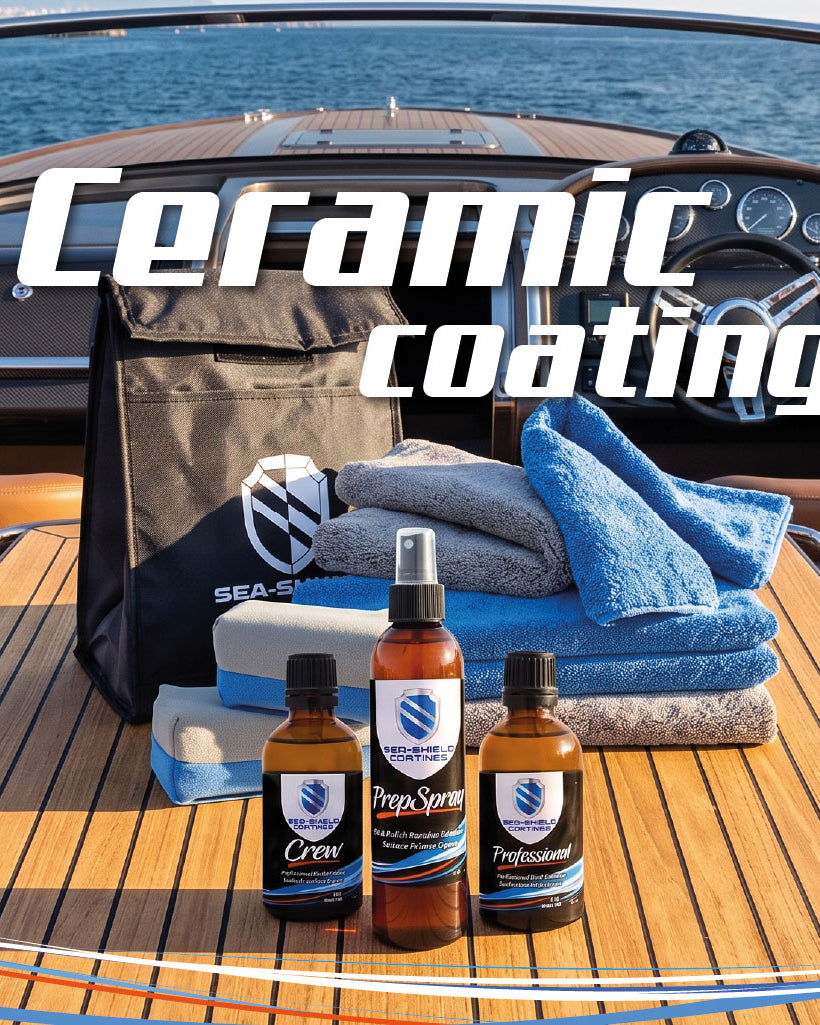
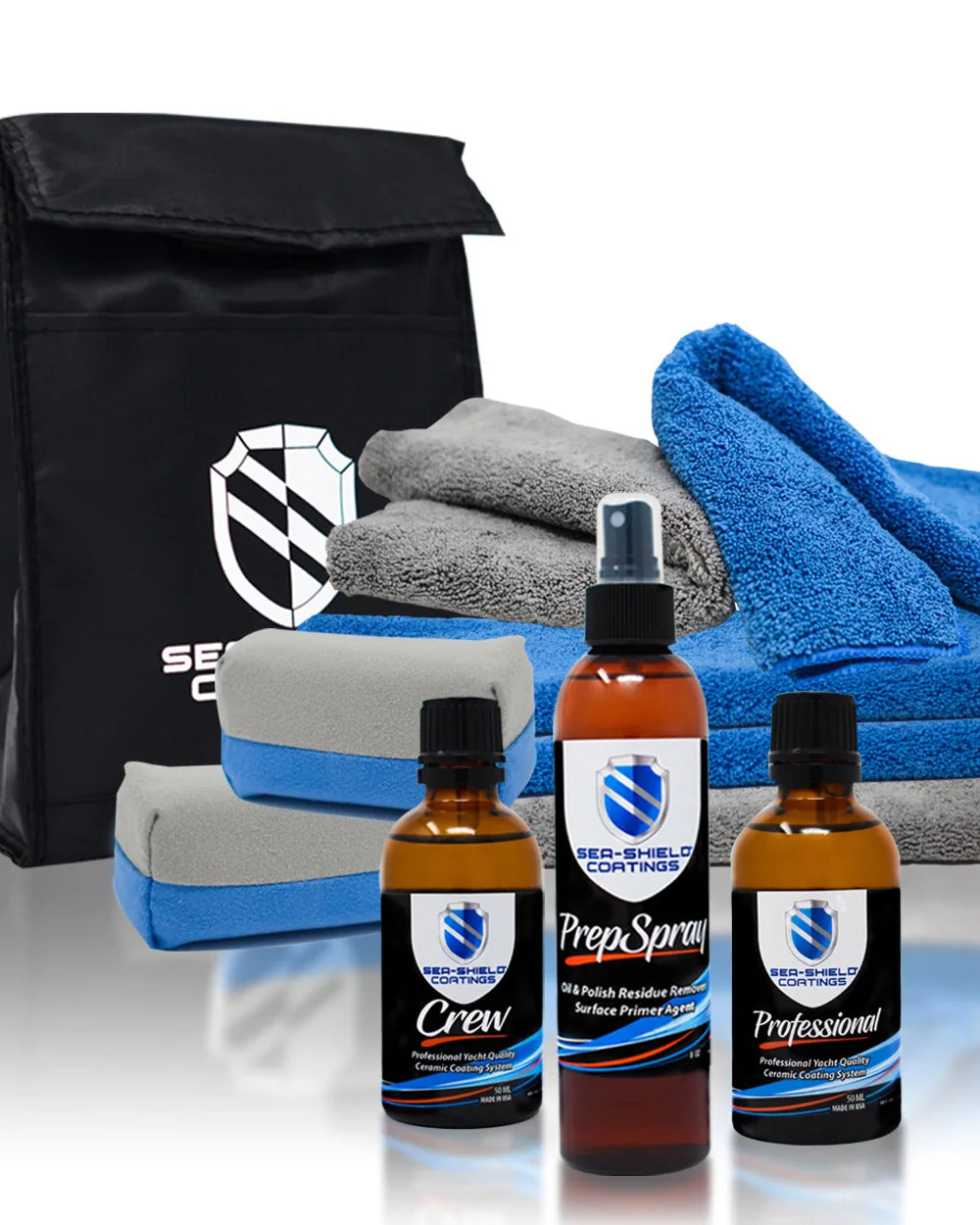
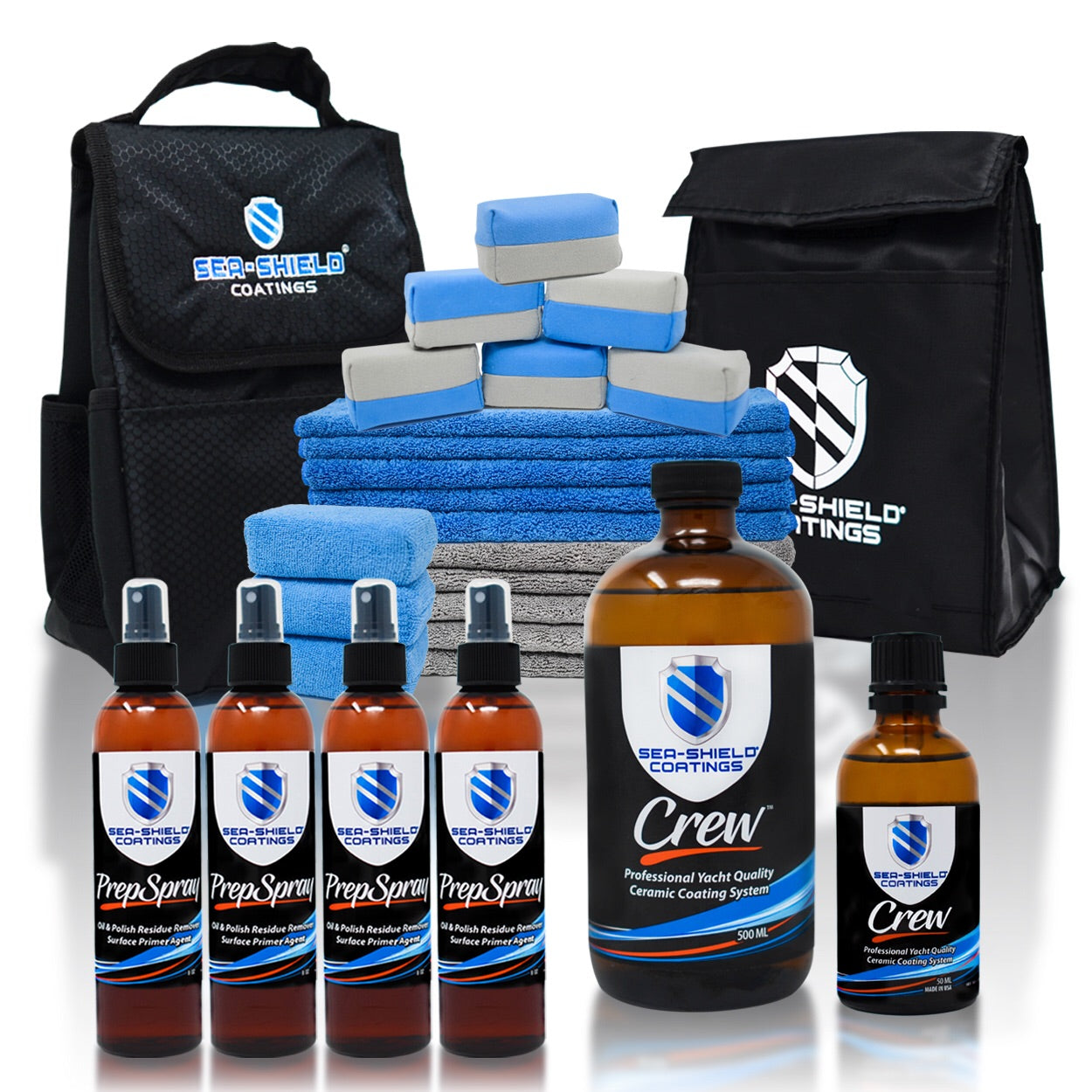
After polishing, the surface must be completely clean before coating. Use Sea-Shield Prep Spray for this. This integral step removes polishing oils left behind from compounding and polishing. The proprietary primer agent increases the integrity of the molecular bond that occurs when applying a ceramic coating, with no residual film left behind. Prep Spray also works well as a glass and stainless cleaner.
Step 3: Applying the Ceramic Coating
Now you coat. This is the main protection layer. Sea-Shield offers two professional-grade ceramic coating options.
Sea-Shield Crew is a professional, yacht-quality marine clear coat designed for DIY applications and crew use. Available in 50 ml, 100 ml, and 500 ml sizes, Crew provides long-lasting protection that can last 1-2 years or more with regular care and washing. It protects against UV radiation, rust, oxidation, and environmental pollutants.
Sea-Shield Professional is designed specifically for professionals looking to have the best protection. Available in 15 ml, 50 ml, and 500 ml sizes, Professional provides exceptional protection against rust, fading, and degeneration. The coating uses advanced ceramic nanotechnology to produce outstanding results.
Both coatings can be applied to a variety of surfaces, including paint, gelcoat, fibreglass, aluminium, and metal.
Application Instructions:
The application area should be well-ventilated with good lighting. Avoid direct sun or hot surfaces when applying. Hot surfaces cause the coating to flash too fast and you won't level it properly. Work in shade or when the surface is cool.
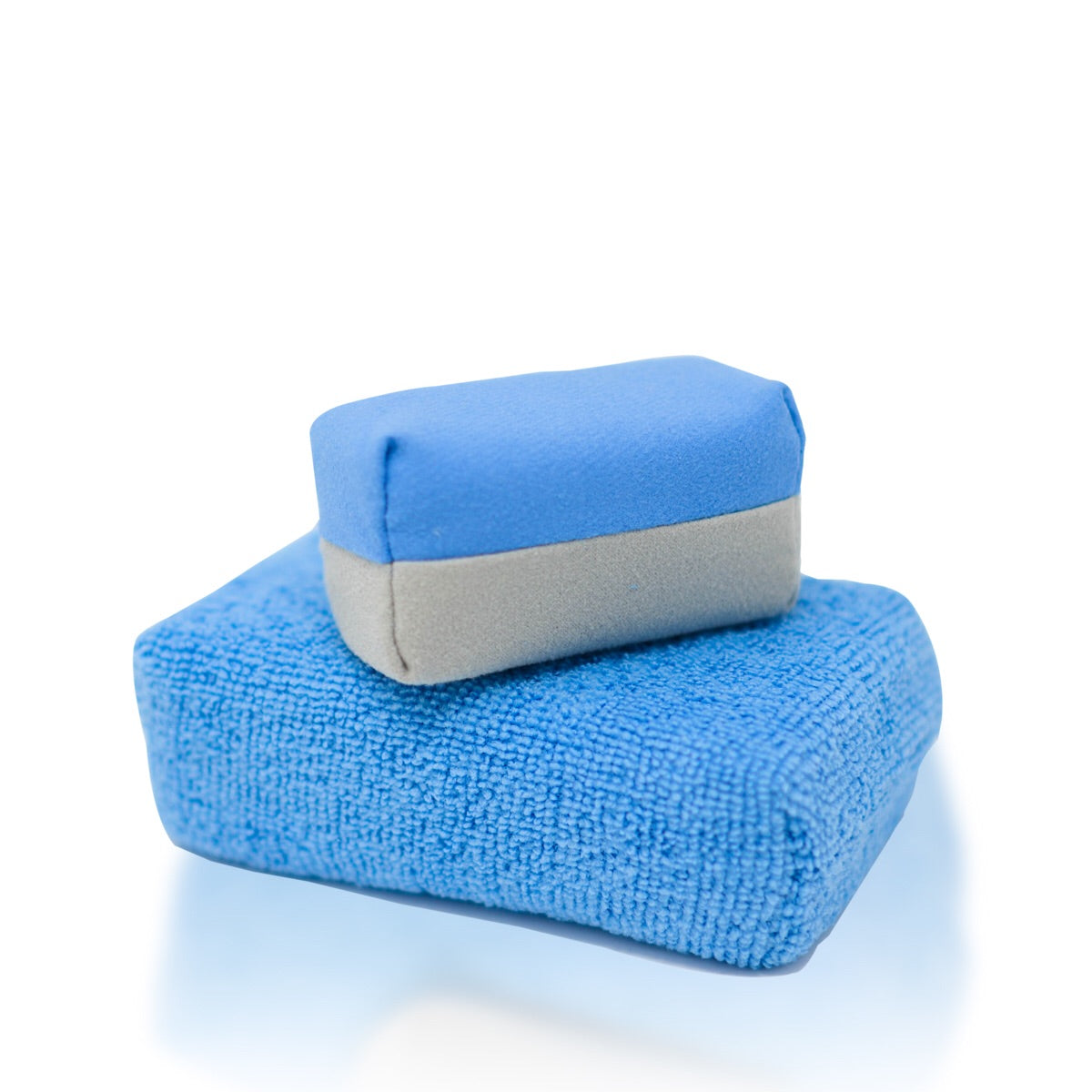
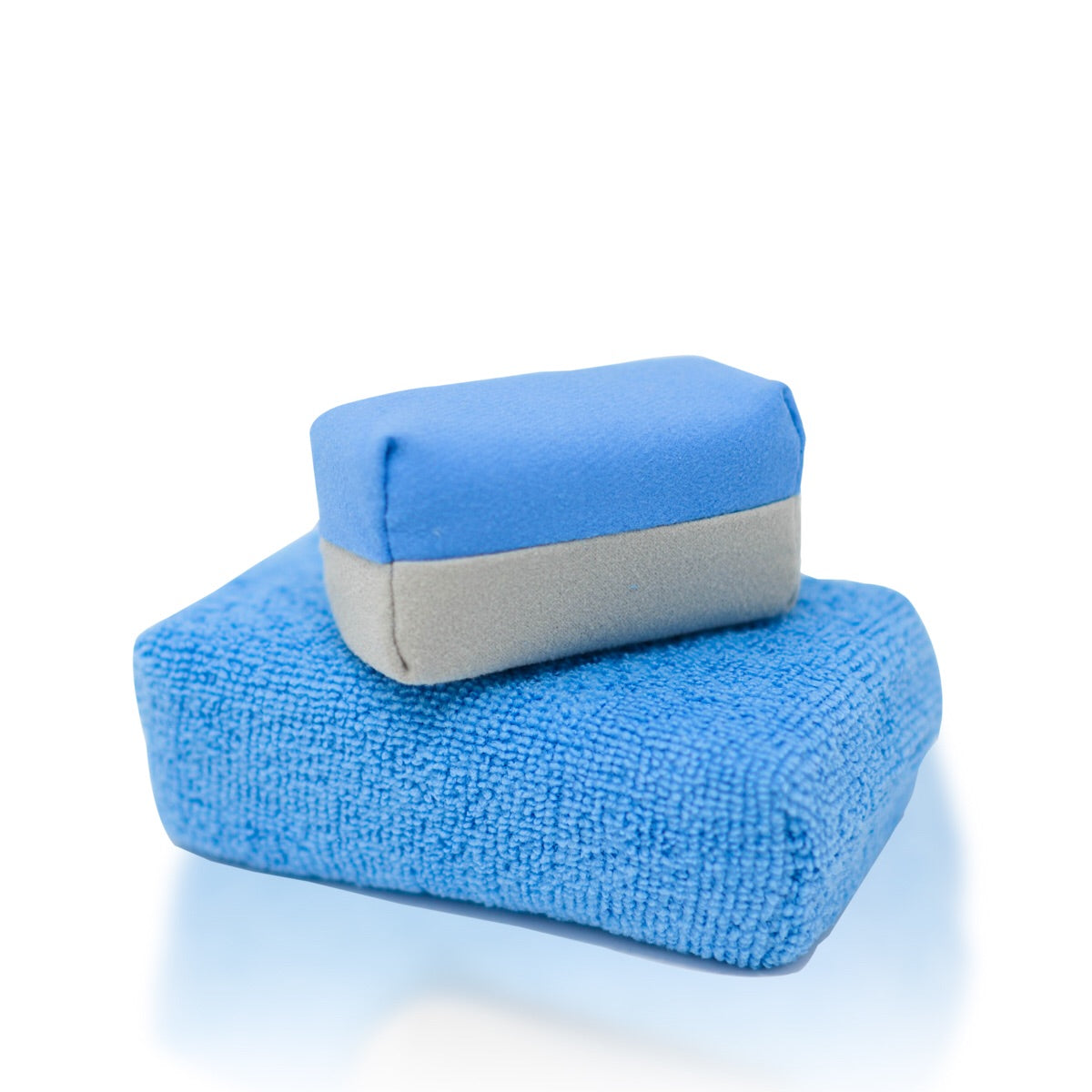
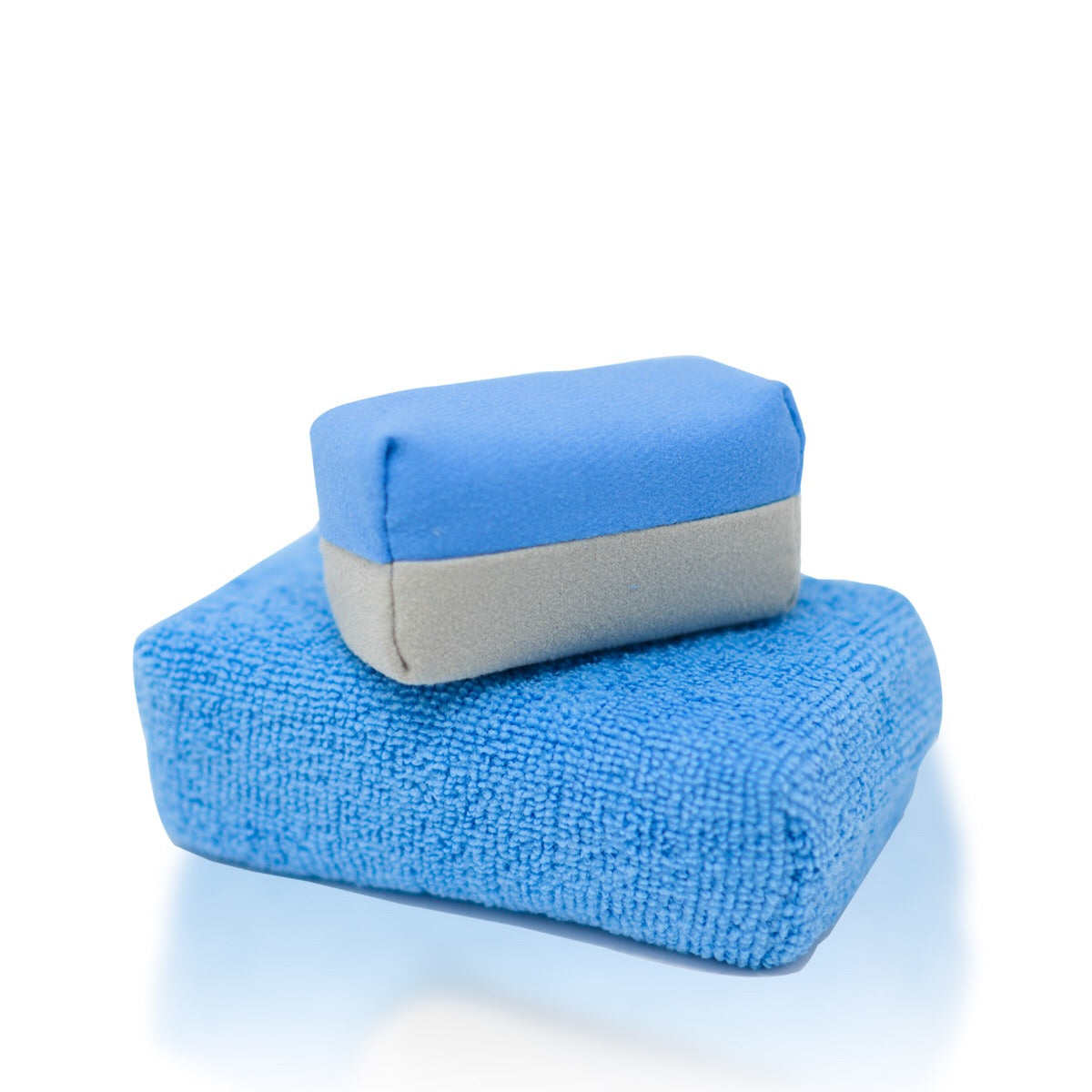
Apply the coating when the surface is completely dry, working on small sections at a time. Wrap a microfiber suede around an applicator block. Drip the product along the length of the applicator block. Apply in a cross-hatch pattern—horizontal and vertical strokes—for even coverage.
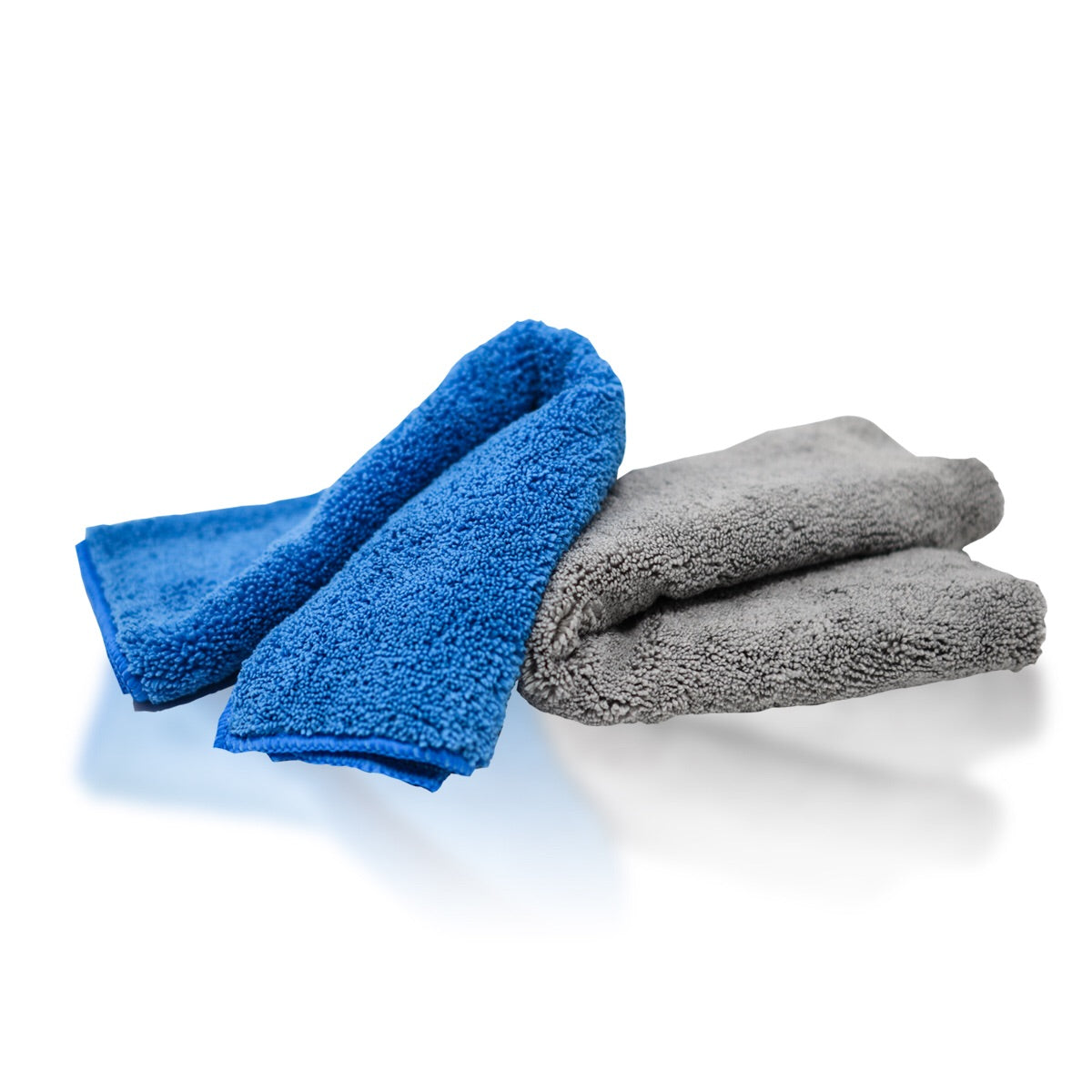
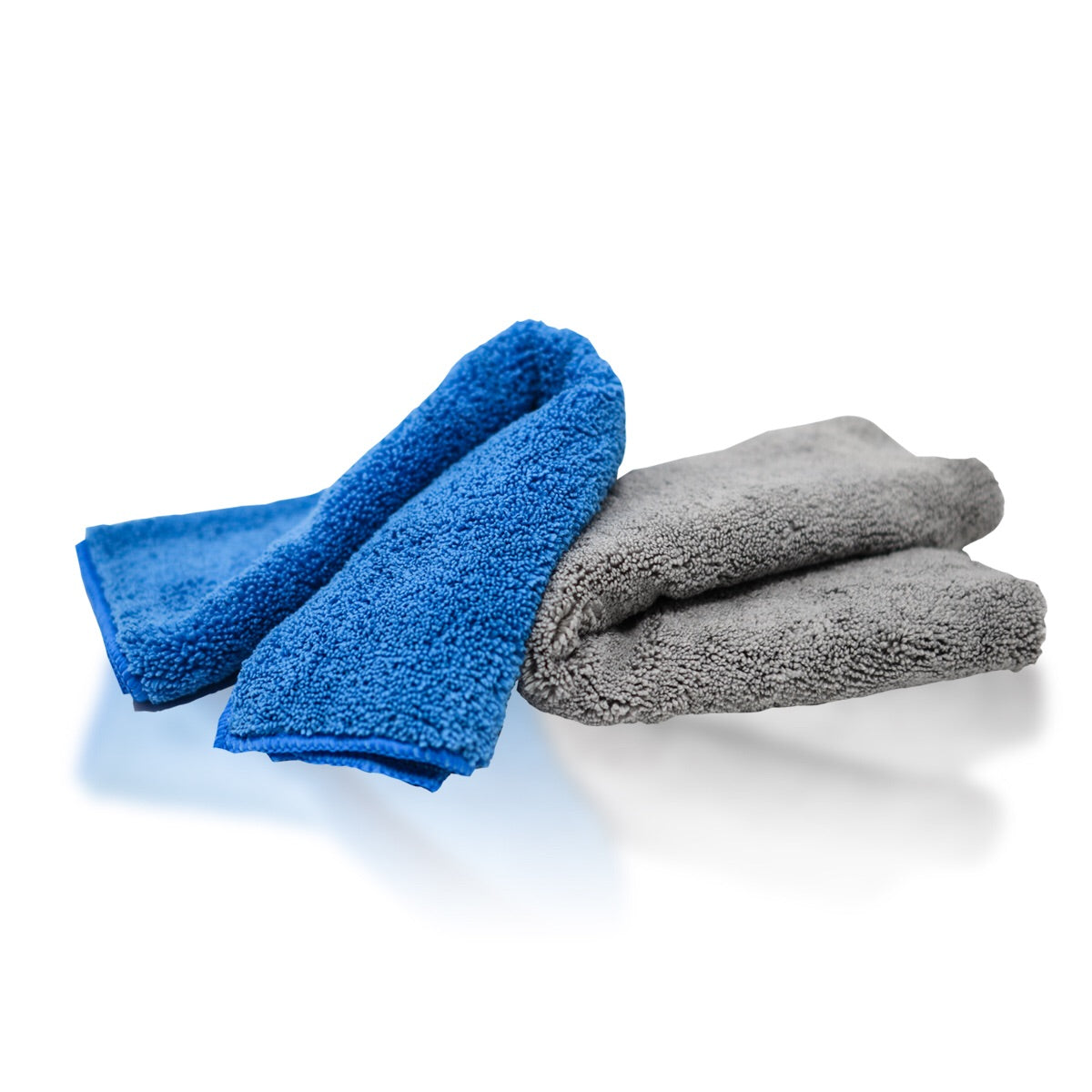
Let the coating flash. Flash time depends on temperature. In warm weather (over 70°F), buff off the coating in about 15 seconds. In cooler weather, you can wait up to 2 minutes before buffing. Use one microfiber towel to wipe away extra coating, then use a second towel to polish the surface until it has a clean, glossy shine. Be sure to remove all excess product, as any spots you miss might leave streaks or an uneven finish.
Use a different side of the applicator as it hardens or if it gets dirty. Keep working in small areas to maintain even coverage.
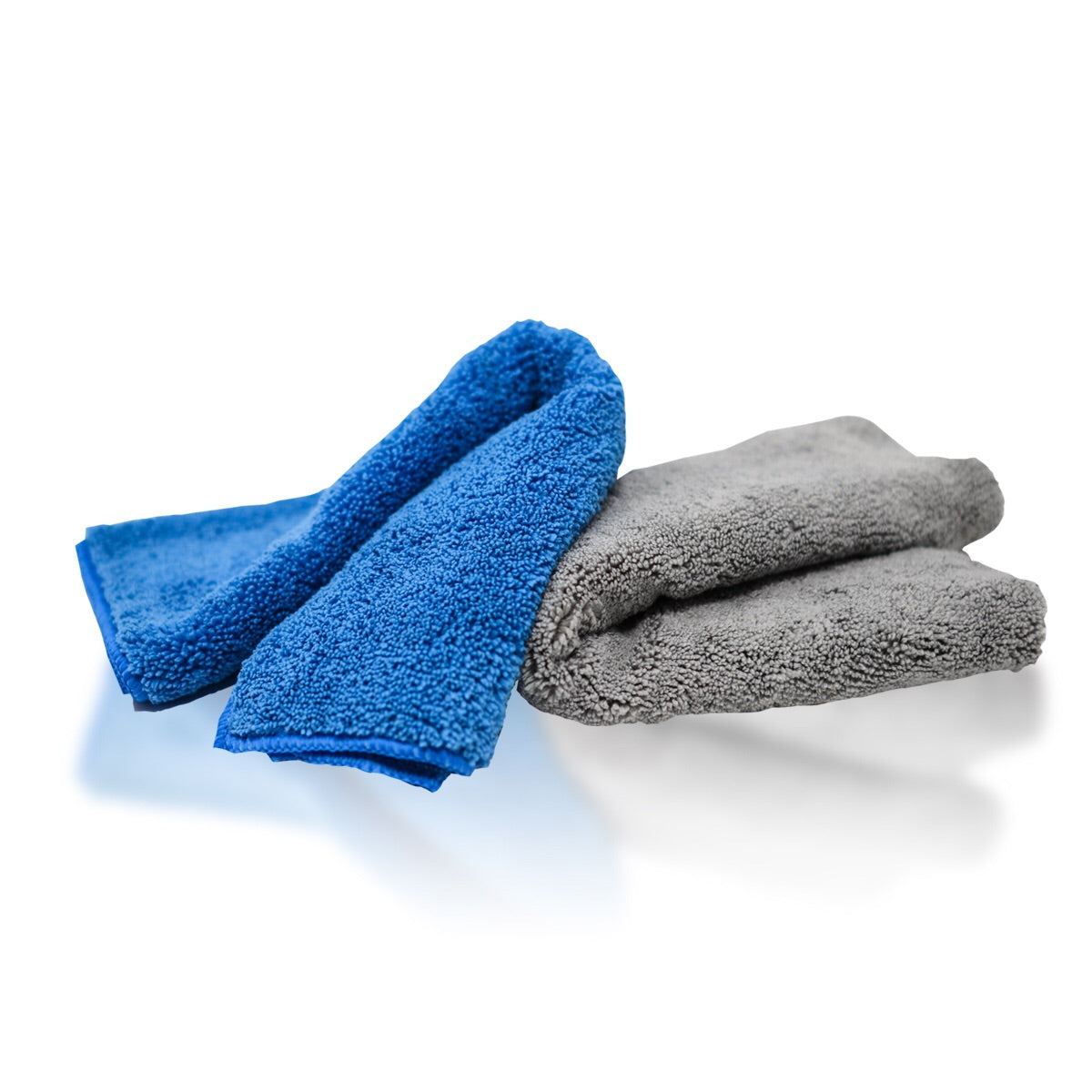
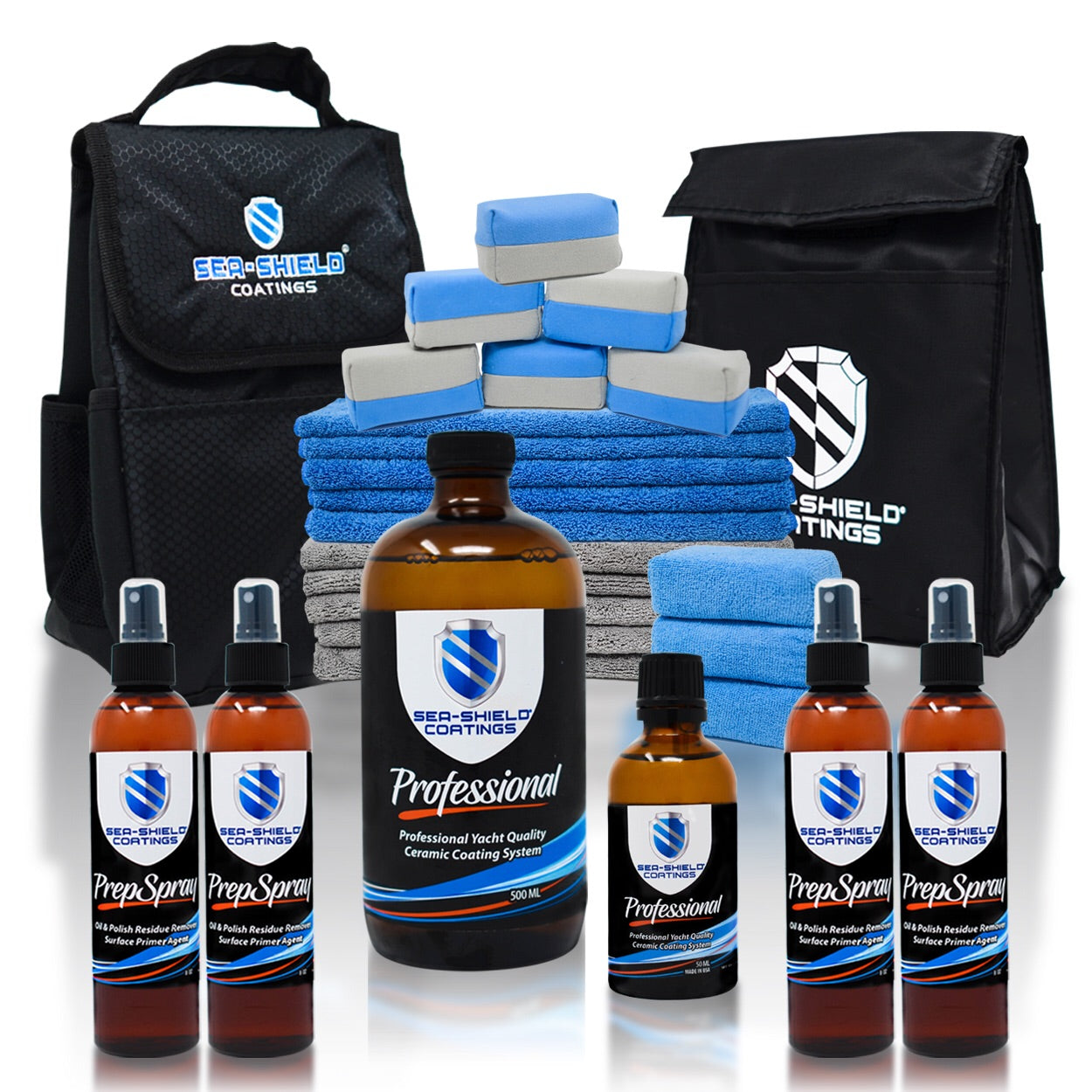
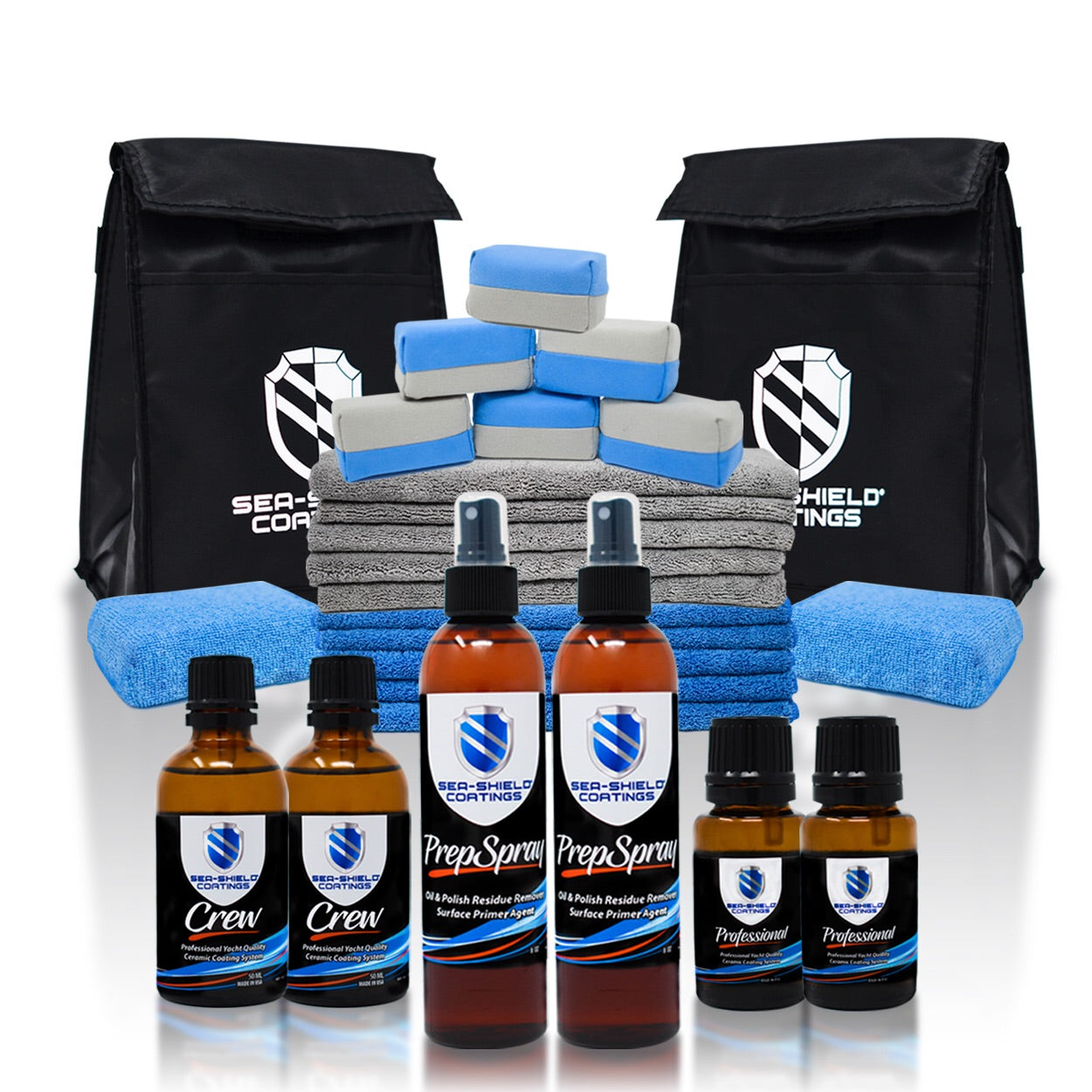
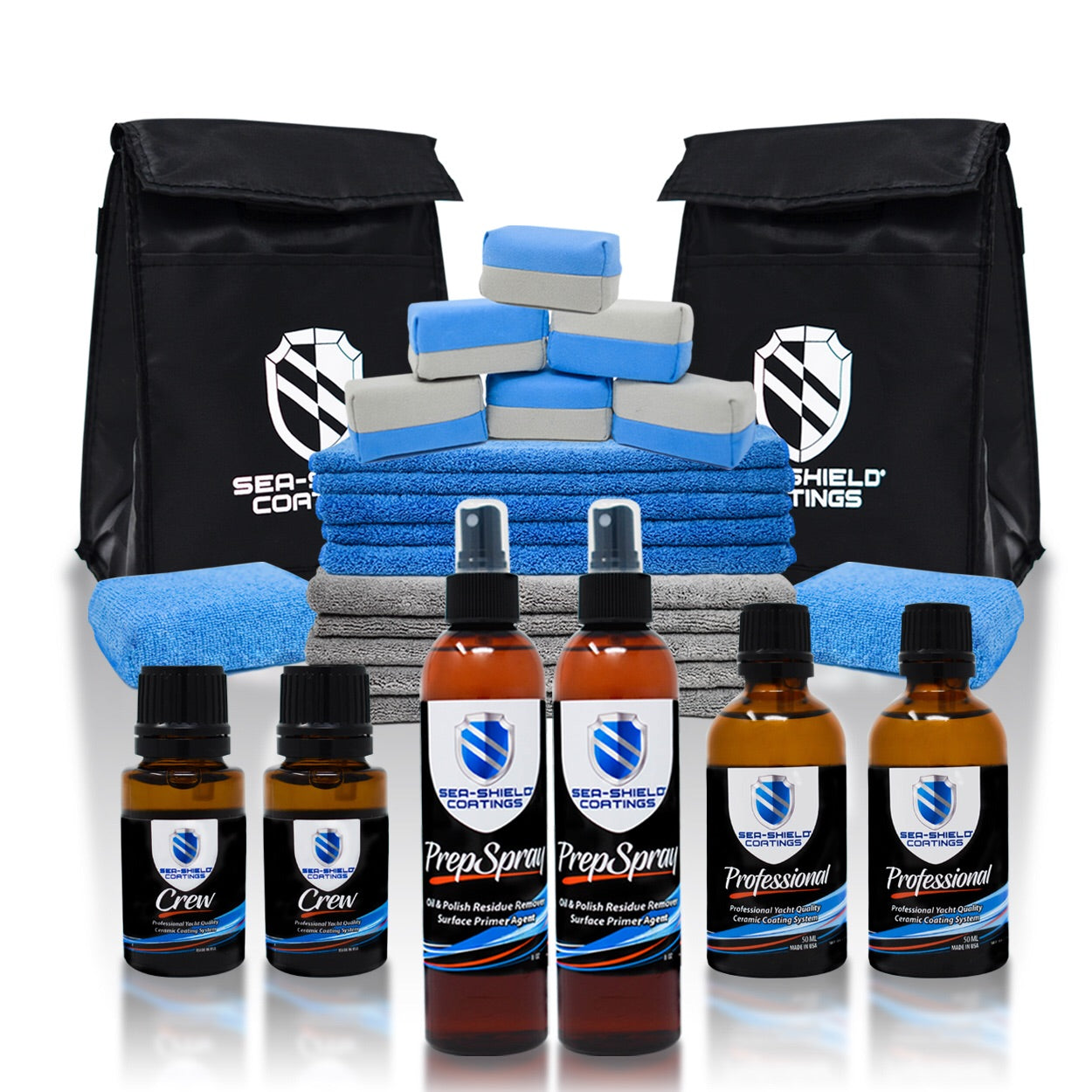
Complete Kits Available: Sea-Shield offers ceramic coating kits that include the ceramic coating, prep spray, applicator blocks, and microfibre towels. These Starter, Intermediate, and Advanced packs provide everything needed for application.
Step 4: Curing and Initial Care
Curing takes time. You can't rush it. The coating needs to harden and reach full strength before it can do its job.
The surface should be kept dry for at least one hour. The coating is dry to touch in about 1 hour. The product is waterproof and will fully cure and harden after 48 hours. For maximum hardness, allow up to 5 days.
Keep the boat dry during the curing period. No washing. No rain if you can help it. Water exposure during curing weakens the bond. If light dust lands on the surface, wipe it off with a soft microfibre towel. Be gentle.
For extra protection, you can apply a second layer of ceramic coating after waiting for at least one hour between coats.
Once the coating cures, the surface changes. It becomes slick. The gloss deepens. Salt doesn't build up as fast. Stains don't stick. Oxidation slows down. You'll notice the difference when you touch it.
Step 5: Maintenance and Regular Care
A coating isn't permanent. It lasts a long time, but it needs care. Regular maintenance keeps it working and looking good.
Use Sea-Shield Boat Soap for washing. It's gentle enough that it won't remove wax or strip the ceramic coating. The biodegradable formula safely cleans all surfaces including paint, gelcoat, glass, and plastic. For coated surfaces or for refreshing Sea-Shield coatings, add 4 ounces of Sea-Shield Nano Fresh to a 5-gallon bucket.
After washing, you can boost the coating. Sea-Shield Final Shield works for this. Final Shield is a ceramic spray top coat that's the most versatile and easy-to-use protection you can apply. The silica resin formula creates a wet and shiny finish on almost all surfaces, including paint, gelcoat, metals, vinyl, leather, black trim, and acrylic. Spray the product on a microfibre applicator (not directly on the surface), apply a very thin coat, and wipe thoroughly until only a light film remains.